Appliance Delivery Checklist for a Smooth Arrival
This article was written by Logan H. and reviewed with assistance from AI tools for clarity and accuracy.
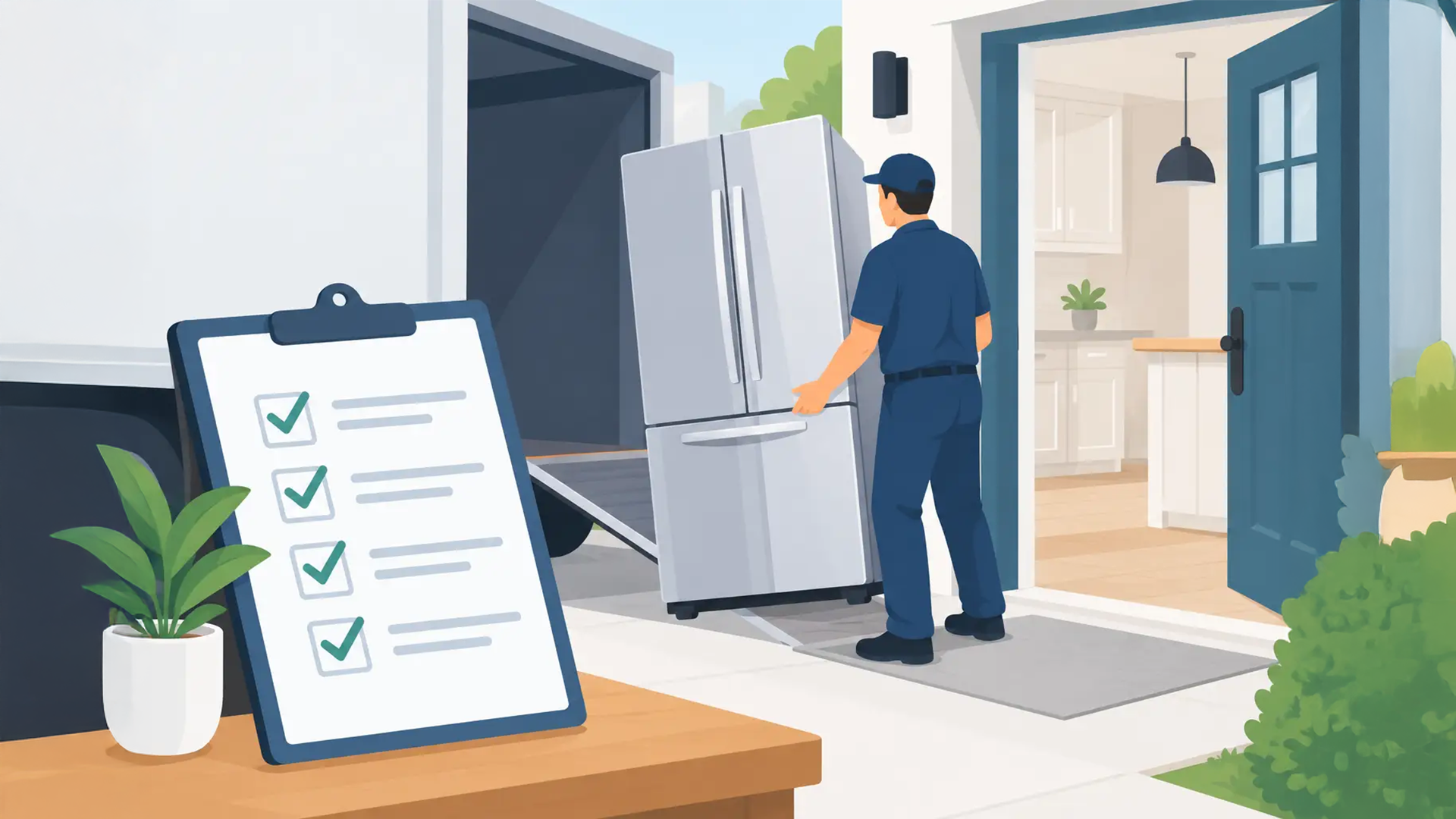
A new refrigerator, range, washer, or dishwasher can transform a room, but delivery day is where careful planning pays off. This appliance delivery checklist helps homeowners, contractors, and remodelers prepare the home, protect the purchase, and avoid the delays that can come from a tight doorway, missing utility connection, or incorrect model dimensions.
Major appliances are large, heavy, and often tied to electrical, plumbing, gas, or ventilation requirements. A few measurements and a clear plan before the truck arrives can make the difference between a quick placement and an unexpected reschedule.
Appliance Delivery Checklist: Start With Measurements
Before ordering an appliance, confirm the dimensions of both the product and the path it must travel. Product specifications usually list width, height, depth, and shipping dimensions. Shipping dimensions can be larger because of packaging, so they matter when access is limited.
Measure the appliance opening, then measure every point along the delivery route: exterior doors, interior doors, hallways, stair landings, elevators, turns, and ceiling height. Do not assume a standard doorway will accommodate a standard appliance. A counter-depth refrigerator, for example, may fit the kitchen cutout but still need its doors removed to pass through a narrow entry.
Pay special attention to depth. Refrigerators need room for door swing and ventilation. Laundry pairs need clearance behind the units for hoses, vents, and power cords. Ranges and wall ovens have installation cutout requirements that are different from the appliance's overall exterior dimensions.
If your project includes custom cabinetry, flooring, or stone countertops, verify final finished dimensions rather than relying on rough framing plans. For renovation projects, builders and designers should confirm that the space is ready before the delivery appointment is scheduled.
Confirm the Delivery Route
Once measurements are complete, walk the route as if you were moving the appliance yourself. Remove furniture, rugs, planters, décor, and anything else that could narrow the path or create a tripping hazard. Secure pets in another room and make arrangements for young children to stay clear of the work area.
Outdoor access deserves the same attention. Clear snow, ice, leaves, and wet surfaces from walkways and steps. Make sure the driveway or curbside area is accessible for a delivery truck. In apartment buildings, condominiums, and co-ops, ask management whether delivery hours, loading docks, elevator reservations, certificates of insurance, or protective coverings are required.
Stairs can change what is possible. A ground-floor kitchen with one or two entry steps is different from carrying a large appliance to a third-floor laundry room. Share relevant access details when arranging delivery so the team can prepare appropriately. If access is unusually tight, it may be necessary to remove a door, railing, or other obstruction in advance. Never assume delivery personnel can alter the home or disassemble the appliance to make it fit.
Prepare Utilities and Installation Conditions
Delivery and installation are related but not always the same service. Confirm what is included with your order and what must be completed before the appointment. This is especially important for gas cooking, built-in refrigeration, wall ovens, dishwashers, and laundry equipment.
The appliance location should have the correct utility connections available and accessible. That may include a properly grounded electrical outlet, water supply valve, drain connection, gas shutoff valve, dryer vent, or exterior ventilation path. Existing connections should be in safe working condition and meet local code requirements.
For a refrigerator with an ice maker or dispenser, locate the water shutoff valve and ensure it works. For a dishwasher, clear the cabinet beneath the sink so plumbing connections are accessible. For a washer, check that hot and cold water valves can be shut off and that the drain standpipe is usable. For a gas range or gas dryer, local requirements may call for a qualified professional and approved gas connection components.
Do not plan to reuse damaged, corroded, or incompatible hoses, vents, power cords, or gas connectors. Some installations require new parts, and some accessories are appliance-specific. Reviewing your model's specifications before delivery can prevent a small missing component from delaying the installation.
Make Space for the New Appliance
Clear the appliance opening, adjacent counters, and nearby cabinets before the delivery team arrives. If you are replacing an existing unit, empty it completely. Remove food from the refrigerator or freezer, dishes from the dishwasher, and clothing from the washer or dryer. Disconnecting an old appliance may require turning off utilities in advance, depending on the service arranged.
Protect nearby flooring, walls, and finished surfaces when appropriate. Delivery professionals use equipment designed for moving heavy products, but preparation is still helpful in homes with newly refinished floors, narrow hallways, or delicate trim. If you are coordinating several appliances for a kitchen renovation, label each room or location clearly. This reduces confusion when a refrigerator, range, dishwasher, and laundry pair arrive in the same delivery window.
Built-in and specialty appliances require another level of coordination. A panel-ready dishwasher, integrated refrigerator, or custom ventilation system may need a contractor or installer on site. Delivery day is not the time to discover that cabinetry panels are unfinished, an electrical junction box is missing, or the vent duct is not in place.
Inspect the Order Before Signing
Have a copy of your order confirmation available. Compare the model numbers, finish, quantity, and visible condition of each appliance before the delivery team leaves. Check that a stainless steel refrigerator is the correct width and configuration, that the washer and dryer are the intended fuel type, and that accessories included in the order are present.
Inspect the carton and appliance exterior for visible dents, scratches, cracked glass, or other shipping damage. If something appears damaged, document it promptly and follow the delivery team's procedure before signing paperwork. Taking clear photos can be useful if follow-up is needed.
A visible inspection is not the same as a full performance test. Some appliances need time to settle after transportation, and refrigerators may need to stand upright before being powered on, depending on manufacturer guidance. Still, confirming the correct product and condition at delivery is one of the most valuable steps a buyer can take.
Plan for Haul-Away and Packaging
If old-appliance haul-away has been arranged, make sure the existing unit is empty, accessible, and ready to remove. Confirm whether doors need to be removed or secured for safety, particularly for old refrigerators and freezers. Local rules and service limitations can vary, so clarify haul-away details before delivery rather than assuming every item can be taken.
New appliance packaging can be substantial. Ask whether the delivery service will remove packaging or whether you should plan for cardboard, foam, and protective materials afterward. Keep any paperwork, manuals, installation instructions, and warranty information in a safe place. It is also wise to record model and serial numbers once the appliance is in position.
Be Available During the Delivery Window
An adult who can make decisions should be present for delivery. That person should know where the appliance belongs, understand the access route, and be able to inspect the order. If a contractor, designer, or building manager is handling the appointment, make sure they have the order details and authority to address access questions.
Keep your phone nearby in case the delivery team needs to confirm arrival timing or encounters a building-access issue. If the home is under construction, verify that power, lighting, and safe access are available. A nearly finished project can still be unready for delivery if floors are wet, pathways are blocked, or trades are working in the installation area.
After Delivery: Use the First Day Well
Once the appliance is placed or installed, review the owner's manual before regular use. Register the product if desired, save your proof of purchase, and learn the basic care requirements. Refrigerators may need several hours to reach temperature. New ovens can have a brief manufacturing odor during initial use. Laundry equipment may require a test cycle, while dishwashers may need installers to confirm water flow and drainage.
For homeowners replacing one appliance and for professionals coordinating an entire project, the goal is the same: make delivery day predictable. A little preparation protects your home, helps the right appliance reach the right location, and lets you start enjoying your new purchase without an avoidable setback.
Take Your Appliance
Knowledge from Good to Great
Just Ask Al is your go-to expert platform to connect, share, and learn — together. Join the Community on Facebook to get expert insights, tips, and more.
Collaborate with fellow appliance enthusiasts today!
38,000+ members and growing
Join the community today—everyone is welcome!


Take Your Appliance Knowledge With You On The Go!
Just Ask Al is your go-to expert platform to connect, share, and learn — together. Join the Community on Facebook to get expert insights, tips, and more.
Collaborate with fellow appliance enthusiasts today!
