Best Washer Dryer for Closets That Actually Fits
This article was generated using AI and reviewed by a human editor for quality and accuracy.
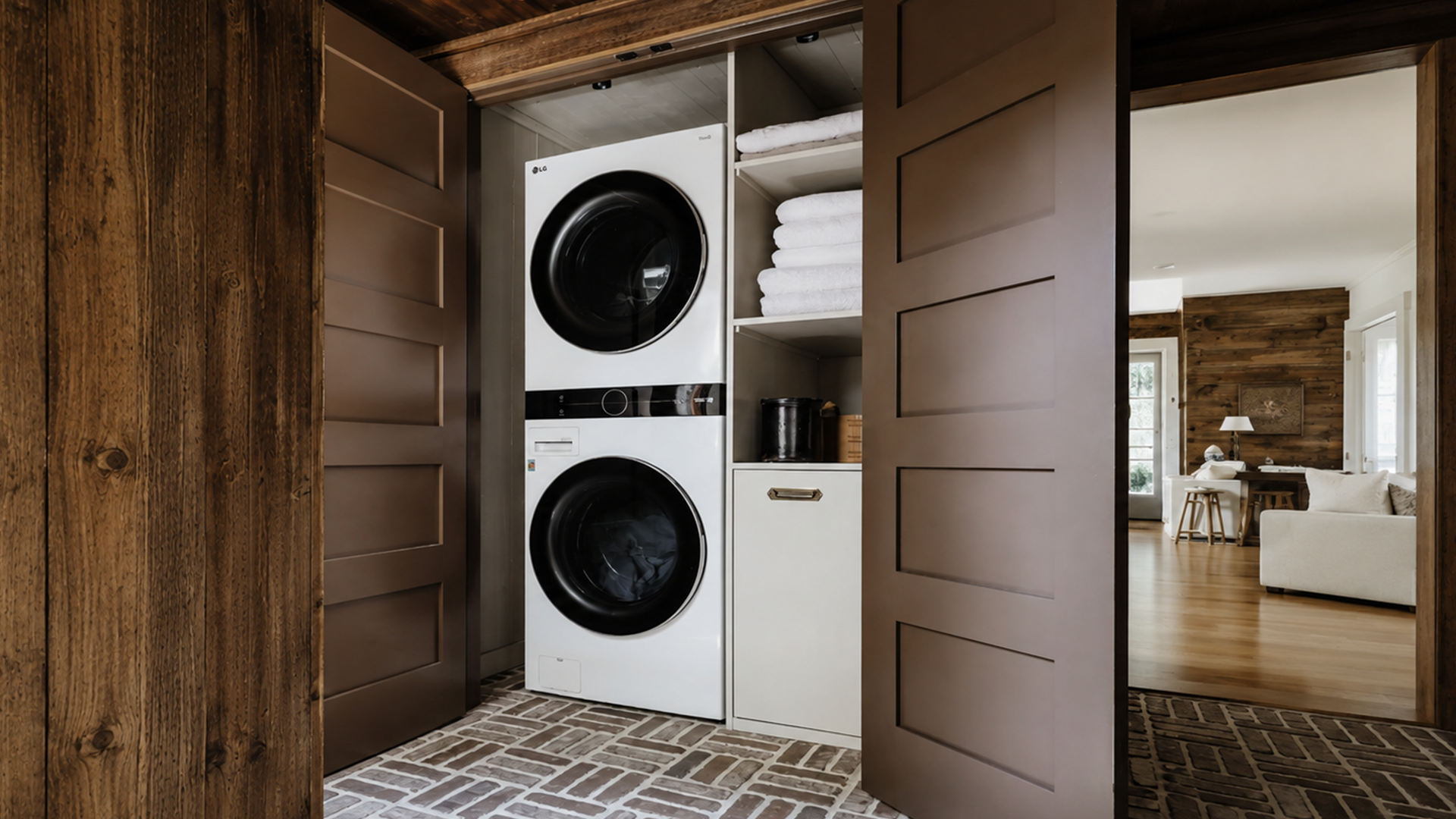
A laundry closet can make excellent use of limited square footage, but it leaves little room for a purchasing mistake. The best washer dryer for closets is not simply the smallest pair available. It is the laundry solution that fits the opening, works with the home’s utility connections, provides enough capacity for the household, and can be installed and serviced properly after the doors are closed.
For a replacement purchase, start with measurements and connections rather than brand preference or promotional pricing. For a renovation or new build, make the appliance selection early enough that the closet can be designed around the equipment instead of forcing compromises later.
Best Washer Dryer for Closets: Start With the Space
Measure the closet opening at its narrowest point, then measure its interior width, height, and depth. Record the dimensions of the doorway and any hallways, stairs, or turns that delivery crews will need to navigate. A unit may fit its final location but still be unable to reach it.
Do not use cabinet dimensions alone. Laundry appliances need clearance behind them for water hoses, drain connections, power cords, and dryer venting where applicable. They also need room in front for loading, unloading, and service access. A shallow closet can be especially challenging because a standard-depth washer and dryer may project past the door frame once hookups are in place.
Height is just as important for stacked configurations. A stacked washer and dryer must fit under the closet header with appropriate space above it, not just squeeze into the opening on paper. If shelving is installed above the units, account for the full machine height, vibration, and the practical need to reach controls or access shutoff valves.
Closet doors also affect the decision. Bi-fold and sliding doors conserve floor space, but they can limit the opening available for loading. Traditional swinging doors need enough room to open without interfering with nearby doors, cabinets, or traffic paths. If the closet is narrow, confirm that the washer door and dryer door can open comfortably in the direction you need.
Choose Between Stacked, Compact, and All-in-One Laundry
There is no single right configuration for every laundry closet. The best choice depends on the room, household size, and the utility setup already in place.
Stacked washer and dryer pairs
A stacked pair typically offers the most familiar laundry experience in a compact footprint. The washer and dryer are separate appliances arranged vertically, allowing one load to dry while the next load washes. This is a meaningful advantage for families, frequent laundry users, and anyone who wants more throughput without expanding the closet width.
Many stacked pairs provide capacities closer to full-size laundry equipment than compact alternatives. The trade-off is height, along with the need to verify whether the dryer requires a dedicated vent and whether the electrical service supports the selected model. Some stacked laundry centers are sold as an integrated unit, while other front-load washers and dryers can be stacked with a manufacturer-approved kit. Do not assume two appliances can be safely stacked just because their widths appear to match.
Compact front-load pairs
Compact washers and dryers are often about 24 inches wide, making them a strong option for apartments, condos, guest suites, and smaller closet openings. They can be placed side by side where width permits or stacked to preserve floor area.
Their smaller drums require more frequent loads, particularly for bedding, towels, or a larger family’s weekly laundry. In return, they can make a laundry closet possible where standard 27-inch equipment will not fit. A compact pair is often the practical answer when the available space is fixed and remodeling the opening is not desirable.
All-in-one washer dryer combos
An all-in-one washer dryer combines washing and drying in one machine. This format can be useful when the closet has room for only one appliance or when a vented dryer cannot be accommodated. You can place a load in the machine, select a wash-and-dry cycle, and return when the process is complete.
The convenience comes with trade-offs. Combo units generally have a smaller drying capacity than washing capacity, and cycle times can be longer than using a separate washer and dryer. Since the machine cannot wash a new load while drying the previous one, it is usually best for one- or two-person households, vacation homes, or laundry closets where physical limitations outweigh the need for high-volume performance.
Confirm Venting, Electrical, Water, and Drain Requirements
A closet laundry installation succeeds or fails on utility details. Before selecting equipment, identify what is already available and what can realistically be added.
A traditional electric dryer commonly requires a 240-volt outlet, while most washers use a standard 120-volt outlet. Gas dryers require an approved gas connection in addition to electricity. If the closet was originally built for a washer only, upgrading electrical service or adding a gas line may change both the project scope and the appliance that makes the most sense.
Dryer venting deserves close attention. Vented dryers need a properly sized, code-compliant exterior vent path. Long, restricted, or poorly routed ductwork can reduce drying performance and create maintenance concerns. Some compact and all-in-one options use ventless heat-pump or condenser drying technology, which eliminates the need for an exterior duct. That can be a major advantage in interior closets, condos, and homes where adding a vent route would be costly.
Ventless drying is not automatically the best answer for every household. It may take longer than conventional vented drying, and it may require regular filter or condenser maintenance. Still, its installation flexibility can outweigh those considerations when venting is unavailable.
Also verify the water supply valves, drain standpipe or drain connection, and floor condition. A drain pan may be advisable for an upper-floor closet or any location where a leak could damage finished areas below. Local codes, building rules, and manufacturer installation instructions should guide the final setup.
Capacity Should Match Your Household, Not Just the Closet
The smallest appliance that fits is not always the best value. An undersized washer can create more cycles, more sorting, and more time spent managing laundry. Conversely, oversized equipment can be unnecessary if the closet is used for a small household or occasional loads.
For a couple or a compact living space, a compact pair or all-in-one may be entirely sufficient. For a family that washes school clothes, towels, athletic wear, and bedding every week, a stacked pair with a larger washer capacity can reduce the number of loads substantially.
Think about the items you wash most often. If king-size bedding is a regular part of the routine, check the manufacturer’s capacity guidance rather than assuming every full-size-looking washer will handle it comfortably. If the closet serves a second-floor bedroom area, quieter front-load equipment and vibration-control features may matter as much as drum size.
Look Beyond Dimensions to Daily Usability
Once the fit and utilities are confirmed, compare the features that will affect everyday use. A reversible dryer door can be valuable in a tight closet, although door reversal should be confirmed for the specific model. Interior lighting, accessible controls, delayed start, sanitize cycles, and sensor drying can all make laundry more convenient, but only if they suit how the household operates.
Noise and vibration deserve attention in closets near bedrooms, living rooms, or home offices. Front-load washers often spin at high speeds to remove more moisture before drying, which can shorten dryer time but makes proper leveling essential. A professional installation helps ensure that hoses are secure, the equipment is level, and stacking hardware is installed correctly.
Service access should not be overlooked. Appliances may need to be pulled forward for maintenance, so avoid permanent trim, shelving, or door hardware that makes removal impossible. Keeping water shutoff valves reachable is a small planning detail that can prevent a major inconvenience later.
Plan Delivery and Installation Before Ordering
A closet laundry purchase involves more coordination than a freestanding appliance in an open laundry room. Confirm the full delivery path, measure the closet again, and make sure old appliances can be removed. If your home requires electrical work, vent modifications, carpentry, or plumbing updates, schedule those improvements before delivery whenever possible.
For homeowners comparing configurations, Plesser’s Appliances can help narrow the options based on closet dimensions, fuel type, venting, and household needs. The goal is to select equipment that works as a complete installation, not just an appliance that looks right in a product photo.
A well-planned closet laundry setup should feel straightforward once it is installed: doors that close, controls that are reachable, loads that fit your routine, and connections that support dependable performance. Measure carefully, account for the installation details, and choose the configuration that will continue to work long after the first load is finished.
Take Your Appliance
Knowledge from Good to Great
Just Ask Al is your go-to expert platform to connect, share, and learn — together. Join the Community on Facebook to get expert insights, tips, and more.
Collaborate with fellow appliance enthusiasts today!
38,000+ members and growing
Join the community today—everyone is welcome!


Take Your Appliance Knowledge With You On The Go!
Just Ask Al is your go-to expert platform to connect, share, and learn — together. Join the Community on Facebook to get expert insights, tips, and more.
Collaborate with fellow appliance enthusiasts today!