The Connected Home: Remote Control, Smart Hubs, and a Future of Effortless Living
This article was written by Al the Appliance Expert and reviewed with assistance from AI tools for clarity and accuracy.
The world of home living is rapidly transforming. Homes are evolving into intelligent, responsive ecosystems that can be managed from anywhere, thanks to smart appliances. This shift provides peace of mind, allowing you to always be in control and informed, even when you're away. This is not a distant dream; it’s today's reality, changing how we live, save, and secure our spaces.
Remote Control, Total Peace of Mind: Managing Your Home Appliances on the Go
Managing your home appliances remotely provides incredible convenience. Imagine being stuck in traffic and realizing you forgot to turn on the dishwasher before a large family dinner. With a quick tap on your app, your smart wash is ready for you. Heading on vacation and unsure if you turned off all the burners? Just check your app to confirm and switch them off with a swipe. This immediate control reduces stress and simplifies your routines, saving you valuable time and mental energy.
Beyond Convenience: Energy Efficiency and Cost Savings
Smart home technology offers significant benefits beyond convenience, particularly in energy efficiency. Smart thermostats adjust temperatures based on occupancy and weather, preventing unnecessary heating or cooling. Smartlighting can turn off when rooms are unoccupied or adjust brightness based on natural light, reducing electricity use. Some appliances can even run during off-peak hours to lower utility bills. Overall, these innovations lead to real savings and a more sustainable home.
A Fortress of Solitude, Remotely Guarded
Remote appliance management enhances home security while providing comfort and savings. Smart locks allow you to lock and unlock doors remotely, grant temporary access to trusted visitors, and receive notifications of movement in your home. Integrated security cameras offer live feeds to your phone, so you can monitor your property from anywhere—like checking on a package delivered to your porch while at work.
Smart sensors also help detect hazards early. Water leak detectors can warn you of a burst pipe, allowing remote shutoff to prevent damage. Smart smoke and carbon monoxide detectors send alerts to your phone and can dispatch emergency services if needed. This proactive approach makes your home more resilient, giving you peace of mind that potential disasters can be averted, even from afar.
Building Your Ecosystem: Choosing the Right Smart Home Hub for Your Residence
In luxury living, where comfort and sophistication are key, the smart home has become essential. At its center is the smart home hub, which manages high-end appliances, lighting, climate control, security, and entertainment, creating a cohesive ecosystem. For a luxury residence, choosing the right hub is vital for seamless integration, reliable performance, and enhanced automation.
The Core of Your Connected Home: What a Hub Does
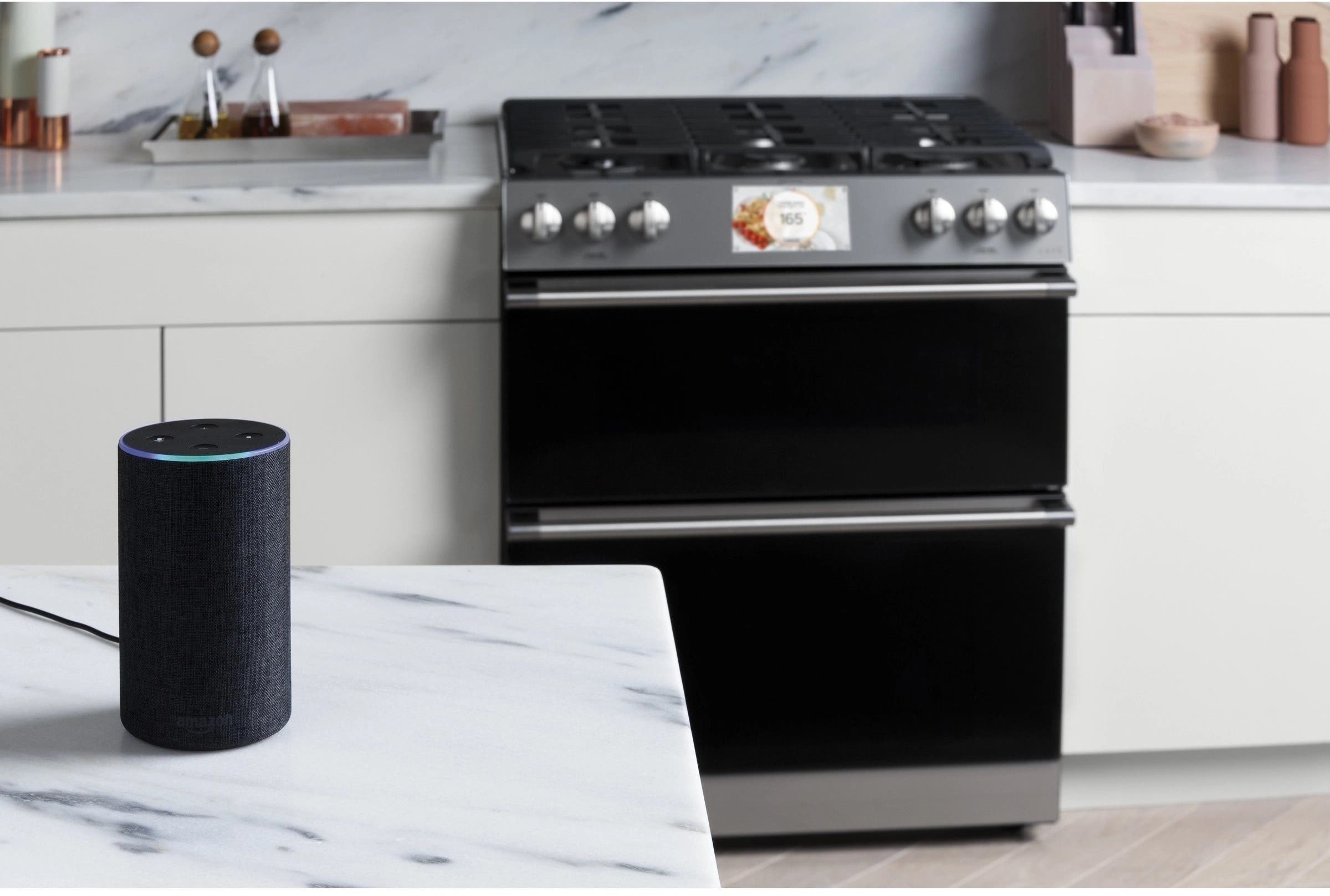
Think of your home as an orchestra, with the smart home hub as the conductor. This device allows your smart appliances—like your AI-equipped refrigerator, intelligent oven, and connected laundry system—to communicate and respond to commands. Without a central hub, managing multiple apps and interfaces becomes cumbersome. A good hub consolidates everything into one easy-to-use control panel, whether it's a touchscreen, a voice assistant, or your smartphone.
The Smart Appliance Landscape: A Hub's Best Friends
Modern smart appliances offer high performance and seamless integration. To optimize their features, your smart home hub should have:
Broad Compatibility: It must communicate effectively with a variety of high-end brands like Samsung (SmartThings) and LG (ThinQ), and support necessary communication protocols.
Protocol Versatility: A hub should support multiple communication protocols, including:
- Zigbee: Ideal for smart lighting and battery-operated sensors, offering faster transmission and better power efficiency.
- Z-Wave: Provides reliable connections over long distances, especially for security devices, due to its lower frequency.
- Matter and Thread: Newer protocols that enhance interoperability and simplify smart home setups, offering future-proofing.
Robust Processing Power and Reliability: Your hub must handle numerous devices and complex automations smoothly, with strong Wi-Fi and mesh networking capabilities, especially in larger homes.
Top Contenders for Your Smart Ecosystem
When considering a smart home hub, several options stand out:
1. Samsung SmartThings Hub (Aeotec Smart Home Hub): Highly versatile, it supports both Zigbee and Z-Wave devices, allowing extensive customization and third-party integration.
2. Amazon Echo Hub / Echo (4th Gen): With support for Zigbee, Thread, and Matter, it is ideal for voice control users who want strong integration with Alexa.
3. Apple HomePod (2nd Gen) / HomePod Mini: Perfect for those in the Apple ecosystem, it offers seamless integration with HomeKit, focusing on privacy and security.
4. Google Nest Hub Max / Nest Hub (2nd Gen): Featuring a built-in screen, it provides a visual interface for managing smart home devices and robust integration with Google Assistant.
5. Control4 / Crestron: These systems are top choices for luxury homes, offering high-end customization, audio/visual integration, and sophisticated lighting control.
Beyond the Hub: Building Your Ecosystem
Choosing the right smart hub is crucial for building your smart home ecosystem and requires careful planning. Here are key considerations:
1. Control Method: Decide whether you prefer voice commands, touchscreens, or both, as this will impact your hub choice.
2. Appliance Integration: Ensure the hub you select integrates well with any luxury smart appliances you plan to use.
3. Scalability: Choose a hub that can accommodate your current and future device needs efficiently.
4. Security and Privacy: Research the security protocols and privacy policies of the hub to protect your data.
5. Installation and Support: For complex setups, consider professional installation and ongoing support for optimal performance.
The right hub is not one-size-fits-all; it should align with your preferred brands, appliances, and vision for a smart living space. Thoughtful consideration will help you create an efficient and convenient smart home ecosystem.
Predictive Maintenance: The Future of Appliance Care Through Smart Diagnostics
The modern kitchen is evolving into a sophisticated ecosystem of interconnected, intelligent appliances. This change brings about predictive maintenance, which anticipates problems before they occur, making appliance care proactive and stress-free.
Gone are the days of sudden breakdowns and frantic calls to repair technicians. Predictive maintenance uses smart diagnostics powered by the Internet of Things (IoT), artificial intelligence (AI), and machine learning (ML) to monitor appliances in real-time. Imagine your refrigerator alerting you to an upcoming compressor issue or your dishwasher warning of a developing blockage before any noticeable problems arise.
How Does Smart Diagnostics Work Its Magic?
Predictive maintenance relies on a continuous flow of data from smart kitchen appliances equipped with various sensors that monitor key performance parameters, such as:
- Temperature sensors: Ensuring optimal cooling in refrigerators and consistent heating in ovens.
- Vibration sensors: Detecting unusual vibrations in motors, indicating wear or misalignment.
- Current and voltage sensors: Measuring electrical load to identify potential degradation.
- Water flow sensors: Monitoring usage for leaks or blockages.
- Usage patterns: Learning habits to spot deviations indicating problems.
This data is sent to a central hub or cloud platform, where advanced AI analyzes it against historical benchmarks to identify subtle anomalies. For instance, a gradual increase in a refrigerator's compressor temperature paired with changing vibrations may signal a potential issue.
When an anomaly is detected, the system generates a specific alert. Instead of a vague "appliance not working," you might receive, "Refrigerator compressor showing early signs of wear; recommended service in 2-4 weeks to prevent failure."
The Benefits Beyond Convenience
Predictive maintenance for kitchen appliances offers numerous benefits beyond merely preventing breakdowns.
- Reduced Downtime: By addressing issues proactively, you can avoid unexpected disruptions in meal preparation and daily chores. Repairs can be scheduled at your convenience.
- Cost Savings: Reactive repairs, especially emergency calls, are often more expensive. Predictive maintenance allows for planned repairs, helping to prevent costly failures and extend the lifespan of appliances.
- Extended Lifespan: Detecting and fixing minor issues early keeps appliances running efficiently and prolongs their operational life.
- Enhanced Safety: Predictive diagnostics can identify hazards like electrical issues or gas leaks, enabling timely interventions to ensure safety.
- Optimized Performance: Well-maintained appliances are more energy-efficient, resulting in lower utility bills.
Smart diagnostics are revolutionizing appliance care, making it an effective part of our smart homes.
Voice Control Your Home: Leveraging Alexa and Google Assistant with Your Appliances
The dream of a smart home, where every command is instantly executed, is now a reality. Voice assistants like Amazon Alexa and Google Assistant make controlling your appliances as simple as speaking. Imagine waking up, saying, "Good morning, Alexa," and having your coffee maker brew coffee, your lights turn on, and the news start playing. This seamless integration redefines our interaction with living spaces, making them more intuitive and efficient.
The Rise of the Vocal Command Center
Smart home devices used to rely on app control or complex scheduling, requiring physical interaction. However, advanced voice assistants powered by Artificial Intelligence (AI) and Natural Language Processing (NLP) have transformed this experience. They can understand conversational language, interpret commands, and connect with various smart devices.
Alexa and Google Assistant are prominent contenders in the smart home market, offering broad compatibility with a range of appliances, including ovens, refrigerators, and washing machines. The list of voice-controllable devices continues to grow.
The Benefits Beyond Convenience
While convenience is a key benefit, voice-controlling your appliances offers much more.
- Hands-Free Operation: Whether you're baking, handling groceries, or relaxing, voice control lets you manage tasks without touching a screen.
- Enhanced Accessibility: For those with mobility or visual impairments, voice control is revolutionary. It provides independence by allowing device usage without physical interaction.
- Increased Efficiency and Automation: Voice assistants can create routines where one command triggers multiple actions, like dimming lights and locking doors with a "Bedtime" command, saving time and energy.
- Improved Home Management: Voice control makes tasks easier—ask if the laundry is done or preheat the oven with a simple command.
Getting Started: A Simple Roadmap
Integrating your appliances with Alexa or Google Assistant can be done easily by following these steps:
1. Set Up Your Voice Assistant: If you haven’t already, set up your Amazon Echo or Google Nest Hub.
2. Check Compatibility: Ensure your smart appliance states compatibility with Alexa or Google Assistant. Look for "Works with Alexa" or "Works with Google Assistant" badges.
3. Connect to Manufacturer’s App: Link the appliance to its dedicated app (e.g., GE SmartHQ, LG ThinQ) and connect it to your Wi-Fi.
4. Link Accounts: Open the Alexa or Google Home app, go to the relevant section (“Skills & Games” for Alexa or “Works with Google” for Google Home), find your appliance brand, and link your account.
5. Discover Devices: Instruct your voice assistant to “Discover devices” or “Sync my devices” to add your appliances.
6. Assign to Rooms and Create Routines: Assign devices to rooms for easier control and explore setting up custom routines for automation.
Voice control in our homes is rapidly advancing. We can expect more sophisticated AI, seamless integration with a broader range of appliances and IoT devices, and better contextual understanding. By using Alexa and Google Assistant, you're not just simplifying your life; you're stepping into a future where your home responds to your needs.
Smart home technology is evolving—from remote controls to voice activation—transforming how we interact with our living spaces. These innovations provide convenience, efficiency, security, and peace of mind. As AI and IoT progress, our homes will become even more intuitive and responsive.
Are you ready to embrace the future of home management and unlock your smart home's full potential?
Take Your Appliance
Knowledge from Good to Great
Just Ask Al is your go-to expert platform to connect, share, and learn — together. Join the Community on Facebook to get expert insights, tips, and more.
Collaborate with fellow appliance enthusiasts today!
38,000+ members and growing
Join the community today—everyone is welcome!

Take Your Appliance Knowledge With You On The Go!
Just Ask Al is your go-to expert platform to connect, share, and learn — together. Join the Community on Facebook to get expert insights, tips, and more.
Collaborate with fellow appliance enthusiasts today!