Counter Depth Refrigerator Buying Guide
This article was generated using AI and reviewed by a human editor for quality and accuracy.
A counter depth refrigerator can make a kitchen look cleaner, more built-in, and easier to move through, but it is not always the right choice for every household. This counter depth refrigerator buying guide is designed to help you sort through the real trade-offs - capacity, fit, layout, and price - so you can choose a model that works for your kitchen and the way you live.
What counter depth really means
Counter depth refrigerators are built to sit closer to the front edge of standard kitchen counters than traditional full-depth models. That usually means a shallower cabinet and less projection into the walkway. The result is a more streamlined look, especially in open-concept kitchens, smaller spaces, and renovation projects where visual balance matters.
That said, counter depth does not mean flush in every installation. Doors, handles, hinges, and ventilation clearances can still extend beyond the cabinets. Actual dimensions vary by brand and model, which is why measuring by product specs matters more than shopping by label alone.
For many buyers, the appeal is simple: better aesthetics and better traffic flow. The compromise is that you usually give up some interior storage compared with a standard-depth refrigerator of similar width.
Start with your kitchen, not the feature list
The best counter depth refrigerator buying guide starts with space planning. Before comparing finishes or smart features, confirm the opening width, height, and depth. Measure the cabinet opening in three places, check for uneven floors, and note any trim, moldings, or side walls that could affect door swing.
You also want to measure the path into the home. A refrigerator that fits the kitchen may still be difficult to bring through a front door, hallway, stairwell, or apartment elevator. For replacement purchases, this matters just as much as the final cutout dimensions.
Leave room for installation requirements. Most refrigerators need clearance for airflow, water line connections if you want ice or water, and enough swing space to open doors and remove bins. In tighter kitchens, a few inches can be the difference between a model that looks great on paper and one that feels frustrating every day.
Choose the right configuration
The right layout depends on how you use fresh food versus frozen food, and how often multiple people are in the kitchen at once.
French door models
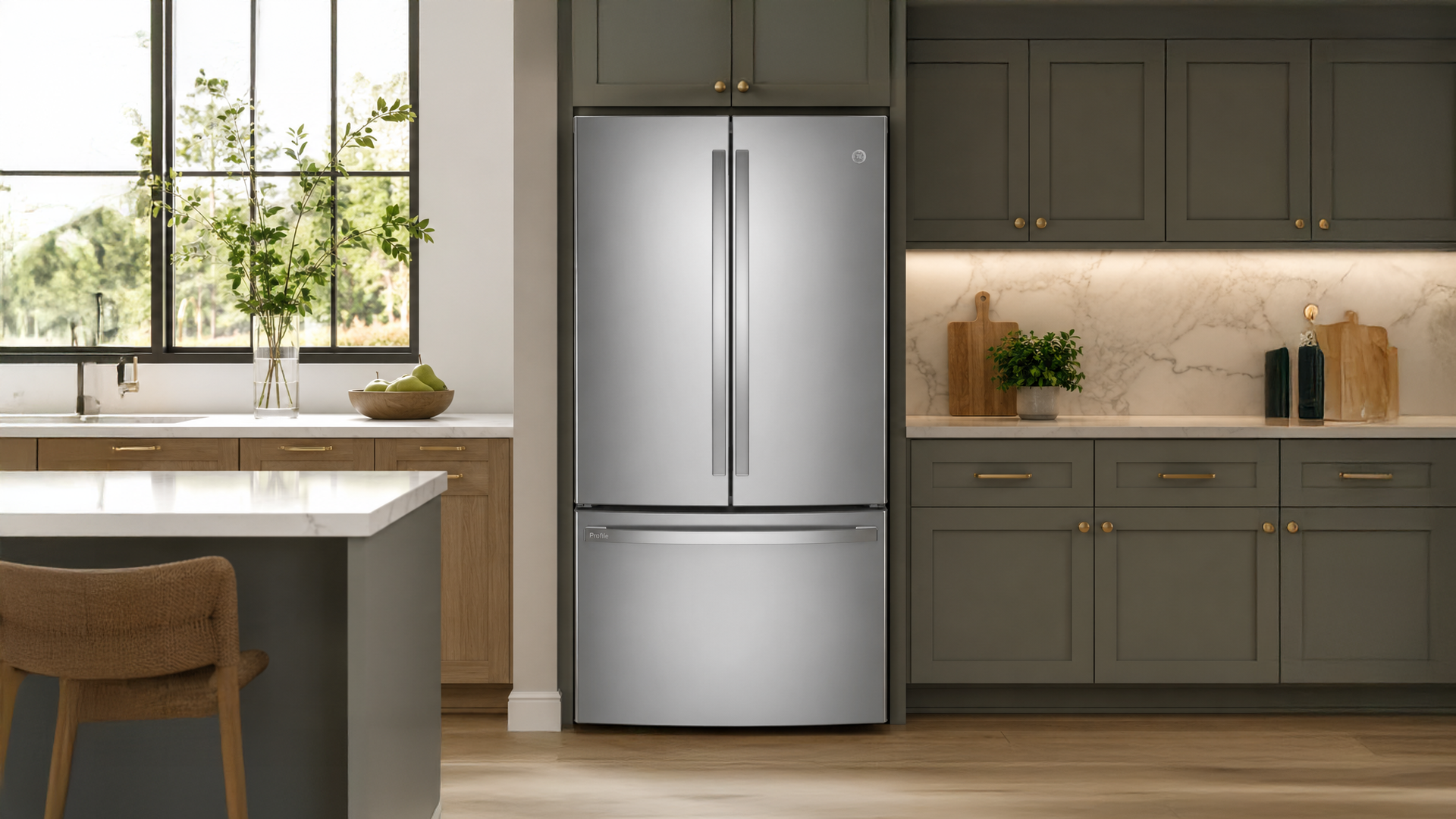
French door counter depth refrigerators are a popular choice because they combine strong visual appeal with wide refrigerator shelving. That wider fresh-food section helps when storing platters, pizza boxes, sheet cakes, or meal-prep containers. Bottom freezers are convenient for households that use refrigerated items more often than frozen ones.
The trade-off is freezer organization. Some bottom freezer drawers are excellent, while others can become a stack of frozen bags and boxes. If freezer access and visibility matter, compare the drawer layout carefully.
Side-by-side models
A side-by-side counter depth refrigerator can make sense in narrower kitchens because the doors do not swing as wide. You get easier access to frozen food at eye level and often more predictable shelf organization from top to bottom.
The compromise is narrower compartments. Wide platters and large frozen pizza boxes can be harder to fit. If your household buys bulk or stores large containers regularly, that limitation can show up quickly.
Bottom freezer and top freezer options
These are less common in premium counter depth selections, but they still have a place for buyers who want a simpler layout or a more value-focused option. A bottom freezer model keeps fresh food higher and easier to reach, while a top freezer can be practical and straightforward if budget matters more than design uniformity.
Capacity matters more in counter depth models
One of the biggest reasons shoppers hesitate with counter depth refrigeration is storage loss. That concern is valid. Because the cabinet is shallower, manufacturers often make up some of the difference with wider interiors, but the total usable space can still be lower than a standard-depth refrigerator.
This does not automatically mean too small. It depends on your shopping habits. If you shop once a week for a family of five, entertain often, or buy in bulk from warehouse clubs, capacity should be a major factor. If you shop more frequently, prefer a cleaner kitchen profile, or already use a secondary freezer, counter depth can be a very smart fit.
Pay attention to interior layout, not just cubic feet. Adjustable shelves, gallon door bins, split shelves, slide-under sections, and well-designed crisper drawers can make a moderate-capacity refrigerator feel much more usable.
Ice and water options can change the fit
External dispensers are convenient, but they often take up space inside the fresh-food compartment. Internal water dispensers preserve a cleaner exterior and can protect some usable shelf space, though they may be less convenient for households that fill glasses throughout the day.
If ice production is important, compare where the ice maker is located and how much storage it provides. In some counter depth models, the ice system is compact by necessity. That can be perfectly fine for everyday use, but it may fall short if you host often or have a larger family.
Water filtration, dual ice makers, craft ice, and measured fill features can be worthwhile, but only if they solve a real need. Extra features are easiest to justify when they improve daily use, not just showroom appeal.
Finish, panel look, and kitchen style
Counter depth refrigerators are often chosen for appearance, so finish matters. Stainless steel remains the standard for broad compatibility, while fingerprint-resistant finishes can make a noticeable difference in busy family kitchens. Black stainless and matte finishes can work well in more design-forward spaces, but matching across brands is not always exact.
If you are planning a renovation or higher-end project, some models offer a more integrated appearance with minimal gaps, hidden hinges, or panel-ready options. Those upgrades create a strong visual result, but they also raise the budget and may increase installation complexity.
For a kitchen update, it is worth thinking about the refrigerator as part of the full appliance package. A well-matched suite can make the room feel more intentional, especially when replacing multiple products at once.
Features worth paying for and features you can skip
Modern refrigerators can include WiFi connectivity, temperature alerts, flexible convertible drawers, advanced cooling systems, and specialty storage zones. Some are genuinely useful. A convertible drawer can be excellent for households that shift between fresh food, beverages, deli storage, and entertaining. Better humidity control and even cooling can help protect produce and reduce waste.
Other features depend on the buyer. If you are replacing a refrigerator quickly and want dependable performance, basic organization, and solid capacity, there is no need to stretch for every premium add-on. If you are designing a long-term kitchen and use your refrigerator heavily every day, paying more for better layout, quieter operation, and stronger food preservation can make sense.
The right question is not which model has the most features. It is which model fits your household with the fewest compromises.
Price, delivery, and installation planning
Counter depth refrigerators usually cost more than standard-depth models with similar branding and finish. Part of that premium comes from design, part from product positioning, and part from the category itself. That is why value should be measured by fit, functionality, and how well the refrigerator supports your kitchen plan.
For remodels and new construction, delivery timing matters. So does installation coordination, especially for homes that need old-unit haul-away, water line setup, door reversal on select models, or careful scheduling around cabinet work and flooring. Buyers often focus on the refrigerator itself and underestimate the importance of getting the logistics right.
Working with an established appliance retailer can help reduce that risk. Plesser’s, for example, serves both replacement shoppers and renovation customers who need a broad brand selection, delivery support, and practical guidance on fit and installation.
Common mistakes to avoid
The most common mistake is assuming all counter depth refrigerators are the same depth. They are not. Another is focusing only on outside dimensions and forgetting door clearance, hinge clearance, and the room needed to remove drawers and shelves.
A third mistake is underestimating storage needs. A refrigerator can fit the space perfectly and still feel too small after the first major grocery trip. Lastly, some shoppers overbuy features they will rarely use while overlooking basics like interior organization, noise level, and ice capacity.
How to know you are choosing the right one
You are on the right track if the model fits your kitchen dimensions, matches your household storage patterns, and gives you the look you want without creating daily annoyances. A great counter depth refrigerator should feel intentional, not cramped. It should improve the kitchen visually while still handling weeknight dinners, school lunches, leftovers, and holiday overflow without a struggle.
If you are between two models, choose the one that solves the practical problem first. The cleaner profile is the reason many people start shopping this category, but the right decision usually comes down to capacity, configuration, and fit. When those three align, the kitchen tends to work better from day one.
Take Your Appliance
Knowledge from Good to Great
Just Ask Al is your go-to expert platform to connect, share, and learn — together. Join the Community on Facebook to get expert insights, tips, and more.
Collaborate with fellow appliance enthusiasts today!
38,000+ members and growing
Join the community today—everyone is welcome!


Take Your Appliance Knowledge With You On The Go!
Just Ask Al is your go-to expert platform to connect, share, and learn — together. Join the Community on Facebook to get expert insights, tips, and more.
Collaborate with fellow appliance enthusiasts today!