Deciphering Appliance Certifications: Your Guide to Smarter Buying
This article was written by Al the Appliance Expert and reviewed with assistance from AI tools for clarity and accuracy.
At Plesser’s Appliances, we understand that buying a major appliance is an important investment. You want reliability, efficiency, safety, and features that truly enhance your home and lifestyle.
As you shop, you may notice a variety of logos, stickers, and acronyms—UL, Energy Star, NSF, ADA, and more. What do all these certifications represent, and how do they affect your buying decisions?
This guide is designed to make sense of those labels, helping you choose with confidence and clarity.
The Foundation of Trust: Safety & Performance
Many certifications speak directly to the safety and fundamental performance of an appliance. These are often non-negotiable for peace of mind.
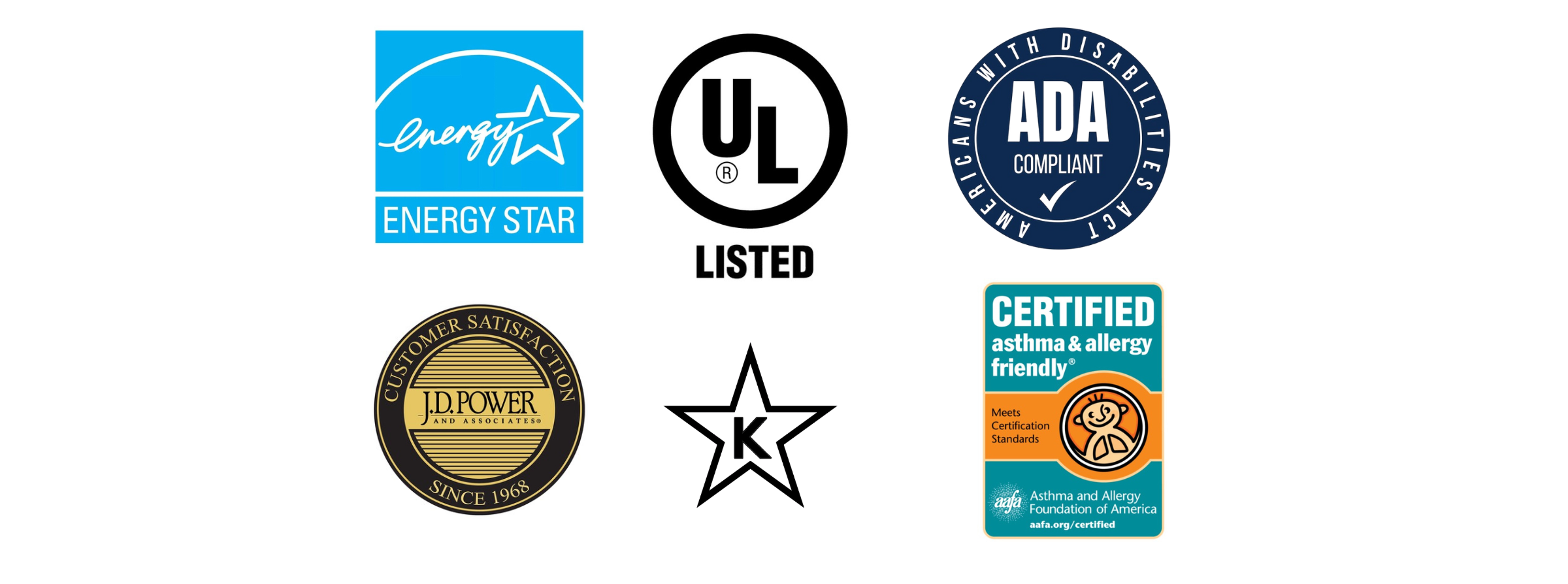
- UL Listed and ETL Listed are key North American safety certifications. Both Underwriters Laboratories (UL) and Intertek (ETL) are Nationally Recognized Testing Laboratories (NRTLs). These marks indicate that independent experts have verified the product's compliance with published safety standards, covering electrical hazards and mechanical integrity.
- CFM Code Compliance (Range Hoods): CFM (Cubic Feet per Minute) is a measure of how much air a ventilation hood can move. Building codes often specify minimum CFM requirements for range hoods, especially for powerful cooking appliances.
- Pro Tip: Ensure the hood you choose meets local building codes, particularly if you have a high-BTU gas range. This is key for effective smoke and odor removal, as well as preventing carbon monoxide buildup.
- Outdoor Use isn’t a certification but a design distinction. Appliances meant for outdoors are built to handle temperature changes, humidity, and the elements without compromising safety or performance.
Saving Energy, Saving Money: Efficiency Standards
In an era of rising energy costs and environmental consciousness, efficiency ratings are more important than ever.
- ENERGY STAR is the most recognizable efficiency label. Created by the U.S. Environmental Protection Agency (EPA) and the U.S. Department of Energy (DOE), ENERGY STAR certified products meet strict energy efficiency guidelines. These products use less electricity or water than standard models, saving money on utility bills and reducing your carbon footprint.
- Pro Tip: If saving on operating costs and being environmentally friendly are priorities, choose ENERGY STAR-certified appliances.
- CEE, the Consortium for Energy Efficiency, sets energy efficiency tiers that are sometimes stricter than those of ENERGY STAR. These ratings help utility companies set rebates, even though they are less visible to consumers.
- Pro Tip: A CEE rating, especially a higher tier, indicates a truly top-tier energy-efficient appliance.
Health, Hygiene & Special Needs: Beyond the Basics
Certain certifications cater to specific health, accessibility, or dietary requirements, offering specialized benefits.
NSF International is a top public health and safety organization. Certifications include the following:
- NSF Certified (General): Indicates a product has been tested and meets public health standards.
- NSF-7 Certified: For commercial refrigerators and freezers. It confirms very high standards for temperature control and food safety, even for similar residential units.
- NSF 456 Certified: Relates to residential clothes washers' ability to reduce allergens.
- ETL-Sanitation, from Intertek, means an appliance meets strict sanitation standards. It’s common in commercial kitchens but also offers peace of mind for residential use.
- Pro Tip: For appliances involved in food storage, preparation, or cleaning (refrigerators, dishwashers, washing machines), NSF or ETL-Sanitation marks provide assurance of hygiene and performance that contributes to a healthier home.
- ADA-compliant (Americans with Disabilities Act) appliances are designed to be accessible for people with physical limitations. Features may include reachable controls, easy-to-open doors, and sometimes auditory cues.
- AAFA Certified (Asthma & Allergy Friendly®): This certification from the Asthma and Allergy Foundation of America primarily applies to air purifiers, vacuum cleaners, and some washing machines. Products with this label have been scientifically tested and proven to reduce exposure to allergens and irritants.
- Medical Use / Hospital Grade Plug: These meet high safety standards for healthcare. A Hospital Grade Plug has a green dot and ensures a strong electrical connection.
- Pro Tip: Although typically not required for standard residential use, certain specialized home medical equipment and high-end residential lab setups may benefit from these enhanced safety features.
Lifestyle & Convenience Certifications: Tailoring to You
These certifications and features address specific lifestyle choices and convenience needs.
- Made in the USA: This label indicates that the product was manufactured domestically, supporting local economies.
- J.D. Power surveys measure customer satisfaction and product quality. An award signals high satisfaction and strong reliability.
- Sabbath Mode, Star-K Certified, OU/CRC Optional, and Kosher Consumer Friendly are features related to Jewish dietary laws (Kosher) and Sabbath observance.
- Sabbath Mode allows ovens, refrigerators, and dishwashers to operate on the Sabbath and holidays in accordance with Jewish law, disabling automatic functions, lights, and sounds.
- Star-K Certified, OU/CRC (Orthodox Union/Chicago Rabbinical Council), signifies that respected Kosher certification agencies have approved the appliance, often found in combination with Sabbath Mode. "OU/CRC Optional" means it can be set up for those certifications.
- Kosher Consumer Friendly: A more general term indicating the appliance's design makes it easy to maintain a Kosher kitchen, even if it doesn't have specific electronic Sabbath Mode features.
- Garage Optimized refrigerators and freezers function well from 0°F to 110°F (-17°C to 43°C), unlike standard units that may struggle in extreme temperatures. If you’ll use a refrigeration unit in an unheated garage or basement, this feature ensures proper food preservation and appliance durability.
- NIST Calibrated Thermometer: The National Institute of Standards and Technology (NIST) sets measurement standards. A "NIST Calibrated Thermometer" means the temperature sensor has been tested against NIST standards for accuracy.
- Pro Tip: While not usually critical for a standard home oven, this is important for precision cooking, scientific applications, or those who demand the utmost accuracy in their appliance's temperature readings.
The Takeaway
Navigating appliance certifications can be easier than it looks. Focus on your priorities—safety, energy savings, health needs, or lifestyle. Knowing these labels lets you pick the best fit with confidence.
Our expert team at Plesser’s can help decode these details and find the ideal certified appliance for you. Call or visit us today!
Take Your Appliance
Knowledge from Good to Great
Just Ask Al is your go-to expert platform to connect, share, and learn — together. Join the Community on Facebook to get expert insights, tips, and more.
Collaborate with fellow appliance enthusiasts today!
38,000+ members and growing
Join the community today—everyone is welcome!
Take Your Appliance Knowledge With You On The Go!
Just Ask Al is your go-to expert platform to connect, share, and learn — together. Join the Community on Facebook to get expert insights, tips, and more.
Collaborate with fellow appliance enthusiasts today!