Dishwasher Buying Guide for Every Kitchen
This article was generated using AI and reviewed by a human editor for quality and accuracy.
A dishwasher replacement can look simple until you start comparing decibel ratings, rack layouts, panel-ready fronts, and installation requirements. This dishwasher buying guide focuses on the decisions that affect daily use, kitchen fit, and long-term value, whether you need a dependable replacement or are specifying appliances for a full renovation.
Start With the Dishwasher Type and Size
For most American kitchens, a 24-inch built-in dishwasher is the standard choice. It offers the best balance of capacity, feature selection, and availability. Standard-height models generally fit an opening about 24 inches wide, 24 inches deep, and 34 to 35 inches high, but measuring is still essential. Flooring, countertop thickness, cabinet modifications, and the location of plumbing connections can all affect whether a model will fit correctly.
An 18-inch dishwasher is a practical alternative for compact kitchens, apartments, bar areas, or households that run smaller loads. It saves valuable cabinet space, though its narrower interior usually means more frequent cycles for families. Portable and countertop dishwashers can help where a built-in installation is not possible, but they do not provide the capacity or finished appearance of an integrated model.
Before selecting a dishwasher, measure the cabinet opening at several points, including the rear. Confirm clearance for the door when open and consider nearby drawers, islands, or walkways. If you are replacing an older unit, inspect the water supply, drain connection, electrical setup, and shutoff valve as well. A smooth delivery and installation starts with accurate information before the appliance arrives.
Choose Capacity by Rack Design, Not Just Place Settings
Place-setting capacity is useful, but it does not tell the whole story. Two dishwashers with a similar stated capacity can load very differently. The better choice is the one that accommodates the cookware, drinkware, and serving pieces your household actually uses.
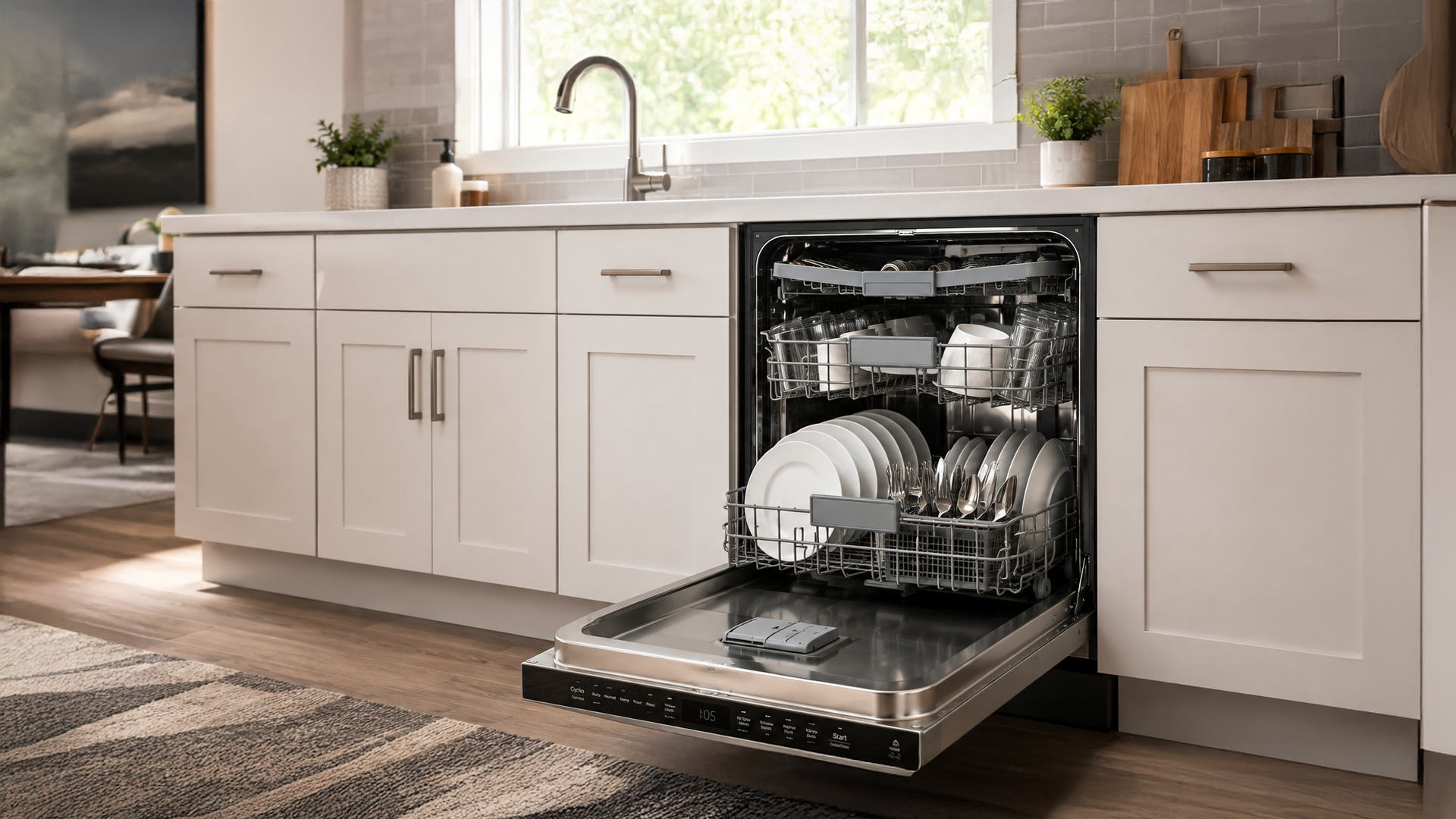
Adjustable upper racks are especially helpful for tall glasses, stand mixer bowls, and large pots. Look for upper racks that move easily, preferably without requiring a full unload. Folding tines create room for pans and oversized dishes, while dedicated stemware holders help protect delicate glasses. Households that cook often should pay close attention to the lower rack, where wide spacing and flexible tines make a noticeable difference with skillets, Dutch ovens, and sheet pans.
A third rack is no longer limited to premium models. It gives flatware, utensils, measuring cups, and small bowls a dedicated space, freeing up room below. Some third racks are shallow and best for silverware; others are deeper and designed to hold mugs or cereal bowls. If a third rack matters to you, review its usable height rather than assuming every version performs the same way.
Cleaning Performance: Sensors, Spray Arms, and Cycles
A quality dishwasher should handle normal daily cleanup without pre-rinsing every plate. Scrape off large food particles, load dishes correctly, and let the machine do the washing. Modern filtration systems and soil sensors are designed to manage the rest.
Soil sensors detect how dirty the wash water is and adjust cycle time, water use, and temperature as needed. An Auto cycle is often the best everyday setting because it responds to the load instead of applying the same wash routine every time. Heavy or Power Wash cycles are useful for baked-on food and cookware, while Quick cycles work best for lightly soiled dishes when time matters more than maximum cleaning intensity.
Spray-arm design also deserves attention. Many dishwashers use multiple spray arms or targeted wash zones to improve coverage on the upper rack, lower rack, and third rack. Some models add bottle jets or concentrated cleaning areas for water bottles and narrow containers. These features can be valuable, but good loading habits still matter. Avoid nesting bowls, blocking spray arms, or placing tall items where they prevent the detergent dispenser from opening.
How Quiet Should a Dishwasher Be?
Dishwasher noise is measured in decibels, or dBA. The lower the rating, the quieter the machine. This is particularly important in open-concept homes, smaller apartments, and kitchens located near bedrooms or living spaces.
Models around 50 dBA are generally suitable for many households. At roughly 44 to 49 dBA, normal conversation is usually comfortable while the dishwasher runs. Models below 44 dBA are very quiet and are often favored for premium kitchens and entertaining spaces. The difference between a 50 dBA and 40 dBA model may sound modest on paper, but it is noticeable in a quiet room.
Lower noise ratings often come with better insulation, advanced motor systems, and premium construction. That can justify the added cost for some buyers, but it is not necessary for every kitchen. If you typically run the dishwasher overnight or have a closed kitchen, a moderately quiet model may offer stronger value.
Drying Systems Matter More Than Many Buyers Expect
Clean dishes are only part of the job. Drying performance affects whether you need to towel dry plastics, wait before unloading, or find water sitting on the tops of cups.
Heated drying uses a heating element to speed up the process and is common on many traditional models. Condensation drying uses the stainless steel tub and cool interior walls to draw moisture away from dishes. It is energy-efficient and gentle on plastics, though it can leave some moisture behind unless you use rinse aid and open the door after the cycle.
Auto-open door drying improves airflow by opening the door slightly at the end of a cycle. Advanced systems may use a fan, a mineral-based drying method, or targeted heat to improve results. For families who wash plastic containers, sippy cups, and reusable food-storage items frequently, drying technology is worth prioritizing. Review the model's drying options and keep expectations realistic: plastic does not retain heat like glass or ceramic, so it is naturally harder to dry completely.
Tub Materials and Controls: Practical Details That Last
Stainless steel tubs are common in mid-range and premium dishwashers. They resist stains and odors, help support condensation drying, and generally offer a more refined interior than plastic tubs. A plastic tub can still be a sensible choice for a budget-focused replacement, particularly if the available cycles and rack design meet your needs.
For controls, choose based on how you use the kitchen. Front controls make it easy to see the cycle status and remaining time. Top controls create a cleaner exterior and are popular in contemporary kitchens, but you may need a floor light or audible signal to know when the cycle is complete. Some models include Wi-Fi monitoring, remote notifications, and cycle recommendations. These features can be convenient, but they should not outweigh core considerations such as cleaning results, quiet operation, and rack flexibility.
Finish, Handle, and Design Coordination
Dishwashers are available in stainless steel, black stainless, black, white, and custom panel-ready designs. A panel-ready model accepts a cabinet-matching front, creating a fully integrated appearance in high-end or design-led kitchens. It requires careful planning because the cabinet panel, handle, and installation specifications must be coordinated with the appliance selection.
If you are replacing only the dishwasher, consider how closely the finish needs to match existing appliances. Stainless steel tones and handle styles vary by manufacturer. If you are building an appliance package, choosing coordinated products from the same brand family can create a more intentional look while simplifying decisions about finishes and handles.
Installation, Service, and the Real Cost of Ownership
The purchase price is only one part of the decision. Confirm what is included with delivery and installation, whether a new water line or power cord is needed, and how the old dishwasher will be removed. Installation requirements vary by model and local conditions, especially when converting from a hardwired connection to a plug-in configuration or updating older plumbing.
Energy and water efficiency can lower operating costs over time, especially for households that run frequent loads. However, the lowest-priced or most efficient model is not automatically the best value if it lacks the capacity, quietness, or drying performance your household needs. A dishwasher that loads well and cleans consistently may reduce repeat cycles, handwashing, and daily frustration.
For renovation projects, order early enough to confirm exact cutout dimensions, panel requirements, and delivery timing. Plesser's Appliances can help shoppers compare mainstream and premium options while coordinating the practical details that matter beyond the showroom or product page.
The right dishwasher is the one that fits your kitchen, your dishes, and your routine. Give the same attention to loading flexibility and installation planning that you give to finishes and features, and you will be far more likely to enjoy the appliance every day.
Take Your Appliance
Knowledge from Good to Great
Just Ask Al is your go-to expert platform to connect, share, and learn — together. Join the Community on Facebook to get expert insights, tips, and more.
Collaborate with fellow appliance enthusiasts today!
38,000+ members and growing
Join the community today—everyone is welcome!


Take Your Appliance Knowledge With You On The Go!
Just Ask Al is your go-to expert platform to connect, share, and learn — together. Join the Community on Facebook to get expert insights, tips, and more.
Collaborate with fellow appliance enthusiasts today!