Freestanding Versus Slide-In Ranges Compared
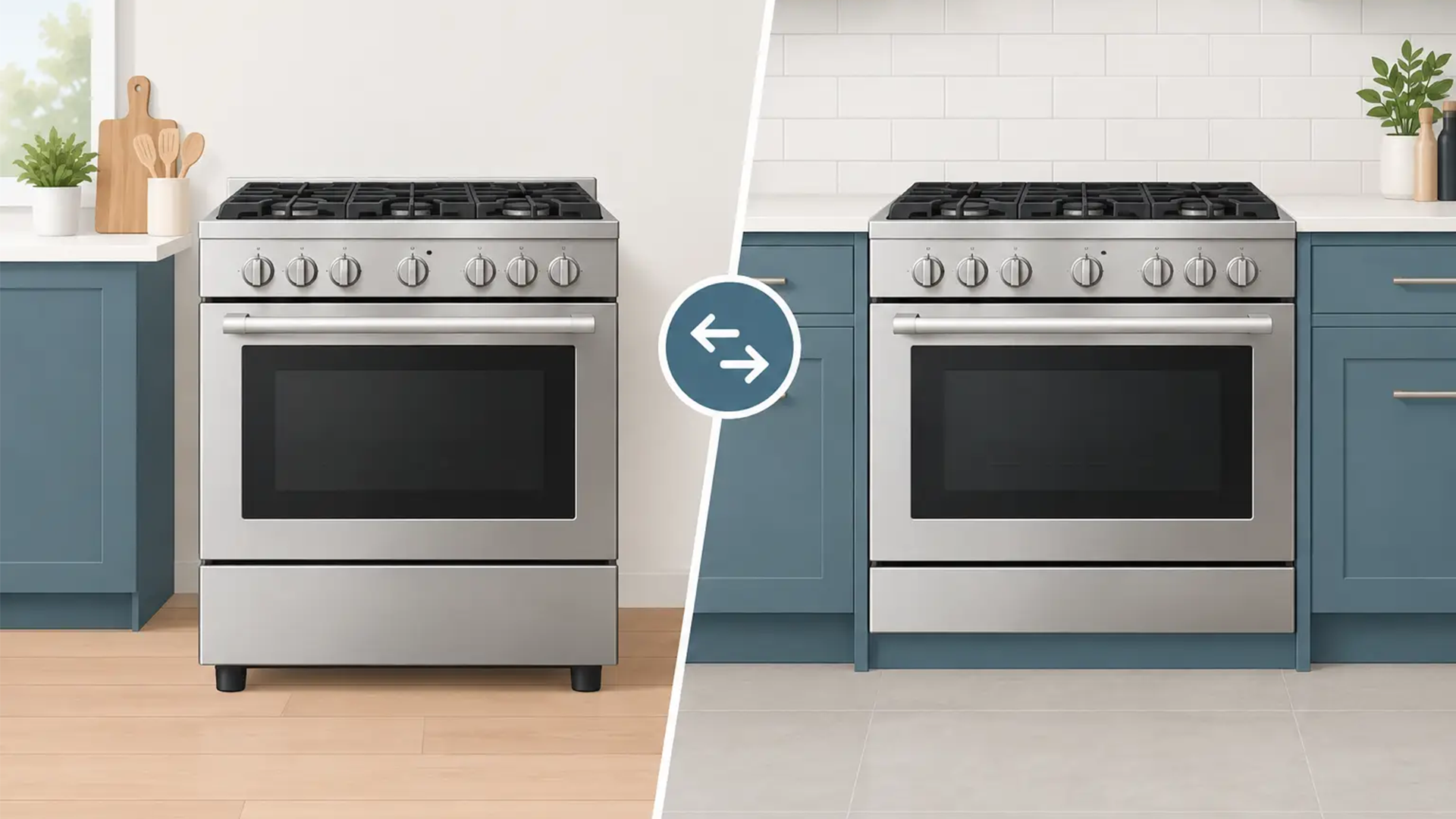
This article was written by Logan H. and reviewed with assistance from AI tools for clarity and accuracy.
A range can look like a straightforward replacement purchase until you measure the opening and notice the details around it. The decision between freestanding versus slide-in ranges affects more than appearance: it influences countertop fit, where the controls sit, how easily spills are cleaned, and what installation work may be required.
For a quick replacement in a standard kitchen, a freestanding range is often the practical choice. For a remodel, new cabinetry, or a kitchen where a built-in look matters, a slide-in range may be worth the additional planning. The right answer depends on your existing space, cooking habits, budget, and the finish you want when the project is complete.
What Is a Freestanding Range?
A freestanding range is designed to stand on its own, with finished sides that can be visible. It can be installed between cabinets, at the end of a cabinet run, or in a more open kitchen layout. Most are 30 inches wide, although wider professional-style models are also available.
The classic freestanding design has controls located on a backguard rising behind the cooktop. This panel keeps controls within easy reach and adds a protective surface between the cooking area and the wall. It is a familiar configuration in many homes, and it remains one of the most versatile options for replacement projects.
Freestanding ranges are available in gas, electric, dual-fuel, and induction configurations. Whether you want the responsiveness of gas burners, the even heat of an electric oven, or the speed and easy cleanup of induction, the range style does not have to limit your fuel choice.
Where Freestanding Ranges Work Best
Freestanding models are especially useful when the range sits at the end of an island or cabinet run, where one side may remain exposed. Their finished sides create a complete look without requiring a cabinet panel or custom surround.
They also make sense when replacing an existing range with a rear control panel. In many cases, the footprint and wall treatment already suit the new appliance, which can reduce the scope and cost of the project. If timing matters, this category typically offers broad selection across value-oriented, mainstream, and premium brands.
What Is a Slide-In Range?
A slide-in range is intended to fit between cabinets and create a more integrated appearance. It usually has front-mounted controls and no traditional rear backguard. The cooktop commonly overlaps the countertop slightly at the sides, helping close the gap between the appliance and the counter.
That lower-profile design gives a kitchen a cleaner visual line. It also puts oven and cooktop controls at the front, so you do not need to reach over hot cookware to adjust a burner or change oven temperature. For households that cook frequently, that convenience can be meaningful.
Because slide-in ranges are meant for a built-in setting, their sides may not be finished for open exposure. They are best installed between cabinets or with an appropriate finished panel at an exposed end. The wall behind the range becomes more visible as well, so a backsplash and paint finish should be considered before installation day.
Why Slide-In Ranges Appeal in Remodels
A slide-in model can make a standard 30-inch cooking space feel more custom without moving to separate wall ovens and a cooktop. It coordinates especially well with continuous stone countertops, tile backsplashes, and cabinetry designed around a front-control appliance.
The design also makes wipe-down cleanup simpler in many kitchens. The cooktop's edges overlap the counter, reducing the open seams where crumbs, grease, and liquid can collect. This does not eliminate cleaning around the appliance, but it can be an advantage over a freestanding range with visible gaps at the sides.
Freestanding Versus Slide-In Ranges: Key Differences
The most noticeable difference is the control location. Traditional freestanding ranges generally place controls on the backguard, while slide-in ranges place them at the front. A front-control layout looks refined and keeps settings accessible, but it also means knobs or touch controls are closer to children and to anyone passing through a busy kitchen. Many models include control locks and other safety features, but households should still consider how the range will be used every day.
The second difference is installation flexibility. A freestanding range is typically more forgiving in an existing opening because it is built to stand independently. A slide-in model calls for closer attention to the cutout width, countertop depth, countertop overhang, and side clearance. Even a small discrepancy can leave an unwanted gap or prevent the range from fitting correctly.
Appearance is the third major distinction. Freestanding ranges tend to have a more traditional profile, particularly when they include a rear control panel. Slide-in models offer a cleaner, more furniture-like look. Neither is automatically better. In a straightforward replacement kitchen, the freestanding profile may look exactly right. In a renovation with new cabinets and surfaces, the slide-in profile may better support the finished design.
Price can differ as well. Freestanding ranges often provide more entry-level options, while slide-in models may carry a higher starting price because of their design and feature mix. However, appliance cost is only part of the budget. A slide-in project may require countertop adjustments, a backsplash update, or trim work. A lower-priced range that does not fit the space properly is rarely a value.
Do Not Confuse Front-Control and Slide-In Models
This is one of the most common shopping mistakes. Not every range with front-mounted controls is a true slide-in range. Some manufacturers offer front-control freestanding models that provide the modern control placement but retain finished sides and a freestanding installation design.
A front-control freestanding range can be an excellent middle ground. It delivers a more contemporary appearance than a traditional backguard model while offering the placement flexibility of a freestanding appliance. It may also be a smart option if your range has an exposed side.
Before making a selection, review the manufacturer's installation specifications rather than relying on product photos alone. Confirm whether the sides are finished, whether the cooktop overlaps the counter, and whether the model is intended to sit between cabinetry. These details determine whether the appliance will look and perform as expected after delivery.
Measure Before You Choose
Accurate measurements protect your budget and prevent installation delays. Measure the width of the opening at the front and back, the depth from the wall to the front edge of the counter, and the available height beneath overhead cabinets or a microwave. Note the location of the electrical outlet or gas connection, as well as any nearby drawers, doors, or island seating that could affect clearance.
For a gas range, confirm that a properly located gas supply and shutoff valve are available. For electric and induction ranges, verify the electrical requirements. Many full-size electric ranges require a 240-volt circuit, and the outlet configuration must match the appliance. If you are changing fuel types or moving the range location, involve qualified professionals early in the planning process.
Also account for ventilation. A range hood or over-the-range microwave should be sized and installed according to the appliance and kitchen layout. This is particularly important for high-output gas burners and powerful professional-style ranges, where effective ventilation supports comfort, indoor air quality, and long-term kitchen cleanliness.
Which Range Is Right for Your Kitchen?
Choose a freestanding range when you need maximum placement flexibility, have an exposed side, want a simple replacement, or are focused on keeping the overall project budget controlled. It is a dependable fit for many kitchens and offers extensive choices in fuel type, finish, capacity, and cooking features.
Choose a slide-in range when the appliance will sit between cabinets, you want a more built-in appearance, and you are willing to verify the surrounding dimensions carefully. It is often the stronger choice for a kitchen renovation where cabinetry, countertops, and backsplash are being coordinated as one design.
Feature priorities should guide the final decision, too. A family that relies on large sheet pans may value oven capacity and rack configuration. Frequent entertainers may prefer a double oven range, flexible cooktop zones, or a high-powered center burner. A household focused on easy cleanup may favor induction or a smooth electric cooktop. Style matters, but the best range should also suit the meals you make and the way your kitchen operates.
For a major purchase, compare the specifications alongside the finish and price. Plesser's Appliances can help shoppers evaluate available configurations, delivery needs, installation considerations, and models suited to both replacement projects and complete kitchen renovations.
A range should fit the opening, but it should also fit the life happening around it. Start with the measurements, choose the installation style that matches the room, and then select the cooking features you will appreciate long after the remodel is finished.
Take Your Appliance
Knowledge from Good to Great
Just Ask Al is your go-to expert platform to connect, share, and learn — together. Join the Community on Facebook to get expert insights, tips, and more.
Collaborate with fellow appliance enthusiasts today!
38,000+ members and growing
Join the community today—everyone is welcome!


Take Your Appliance Knowledge With You On The Go!
Just Ask Al is your go-to expert platform to connect, share, and learn — together. Join the Community on Facebook to get expert insights, tips, and more.
Collaborate with fellow appliance enthusiasts today!
