French Door Refrigerator Review for Smart Buyers
This article was generated using AI and reviewed by a human editor for quality and accuracy.
A French door refrigerator can make a kitchen feel more organized on the first day you use it - but the wrong configuration can create daily frustrations for years. This French door refrigerator review focuses on the details that affect real households: usable fresh-food space, freezer access, ice production, installation clearance, and the features worth paying for.
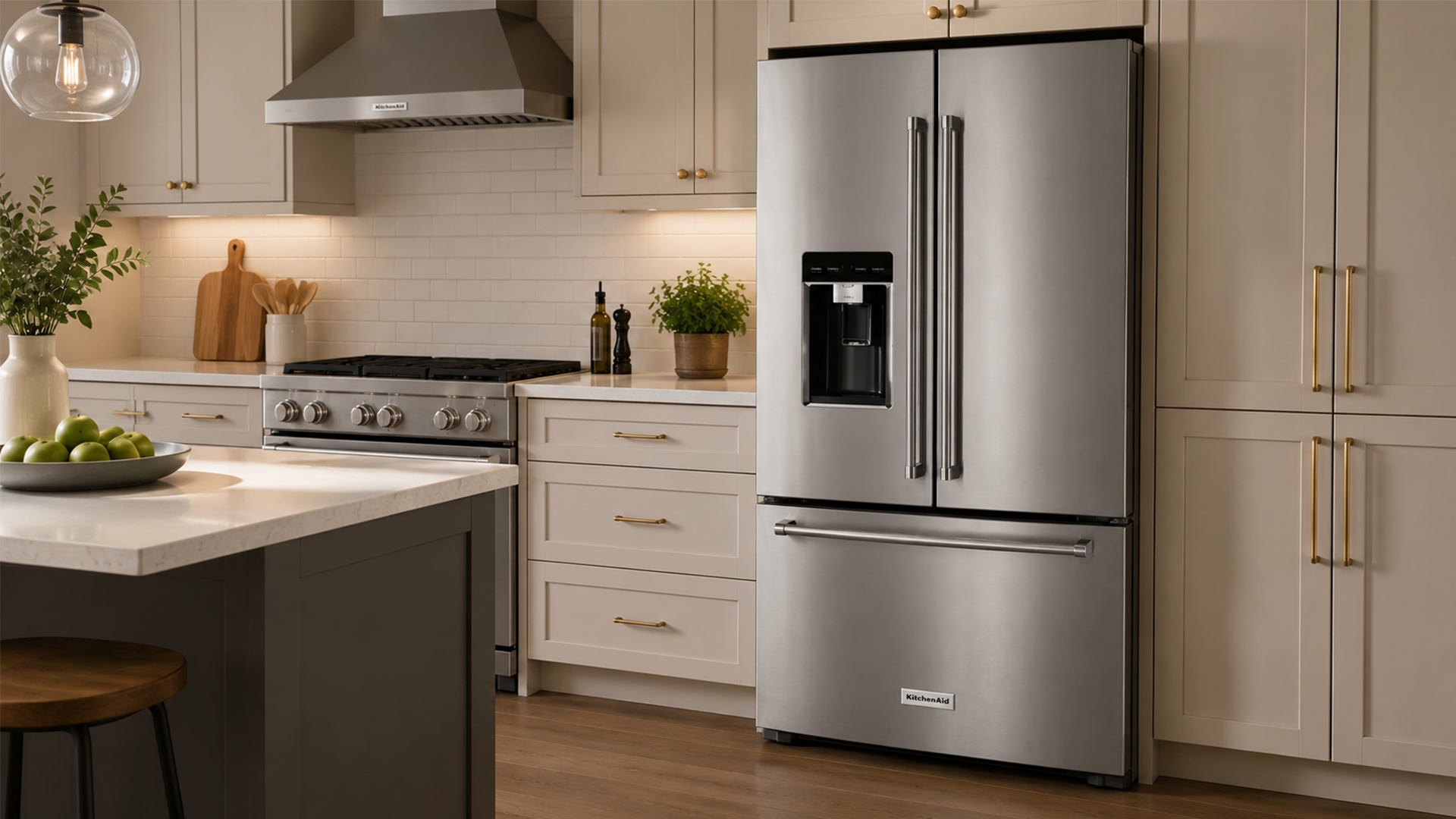
French door models place two narrow refrigerator doors above a pull-out freezer. The layout gives you wide shelves for platters and pizza boxes while keeping commonly used food at eye level. It is a strong choice for families, frequent cooks, and homeowners updating a kitchen, provided the refrigerator fits both the opening and the way the kitchen is used.
French Door Refrigerator Review: The Core Advantages
The main reason shoppers choose a French door refrigerator is fresh-food access. Because the refrigerator compartment is on top, produce drawers, milk, leftovers, and everyday ingredients are easier to see without bending down. Wide shelves also accommodate entertaining trays and large cookware more comfortably than many side-by-side models.
The split doors require less swing clearance than one full-width door. That matters in a galley kitchen, an island layout, or any space where traffic passes in front of the refrigerator. You can open one side to grab a drink without opening the entire fresh-food compartment, although the energy difference in everyday use is modest.
Most French door refrigerators also offer flexible storage. Adjustable shelves, gallon-door bins, full-width pantry drawers, and temperature-controlled middle drawers can make a meaningful difference when shopping for a family. A convertible drawer is especially useful when you need extra beverage space for a holiday weekend or more freezer room for bulk purchases.
There are trade-offs. The bottom freezer is convenient for frozen food you use less often, but it can become a catch-all without dividers. Some models have a single freezer basket, while others add a second tier or sliding tray that makes smaller items easier to find. Also, a French door refrigerator usually costs more than a comparable top-freezer model, and premium configurations can move quickly into luxury-appliance pricing.
Start With Fit, Not Features
A feature-rich refrigerator is not a good value if it does not install correctly. Before comparing finishes or dispensers, measure the cabinet opening at the front and back, the height beneath surrounding cabinetry, and the depth from the rear wall to the front of adjacent counters. Measure the path from the delivery entrance to the kitchen as well.
Width is only the first number. A standard counter-depth refrigerator typically projects less beyond the cabinets than a standard-depth model, creating a more built-in appearance. In return, it often offers less total capacity. For a busy household that stores large grocery runs, a full-depth model may be the better practical choice if the kitchen can accommodate it.
Check the manufacturer’s required clearance around the sides, top, and rear. Refrigerators need airflow to operate properly, and tight installations can affect performance or make the doors difficult to open. If the unit will sit beside a wall, confirm the door-swing requirement and whether the crisper drawers can pull out fully.
Door depth deserves the same attention. Many counter-depth French door refrigerators are not truly flush with cabinetry once handles are included. That is normal, but it should be planned for during a renovation. A professional measurement and installation discussion can prevent a costly surprise after delivery.
Capacity Is More Than Cubic Feet
French door refrigerators commonly range from roughly 20 to 30 cubic feet. A larger number can be useful, but internal layout often matters more than the published total. Deep door bins, a well-designed pantry drawer, and a freezer with multiple levels can outperform a larger model with less thoughtful organization.
For one or two people, a 20- to 22-cubic-foot counter-depth model may provide ample room while preserving a clean kitchen profile. Families who cook often, buy in bulk, or store meal-prep containers may be happier in the 25- to 28-cubic-foot range. If freezer capacity is a priority, compare the freezer’s usable layout rather than assuming a large overall refrigerator will have a large freezer.
Bring your everyday items into the decision. Think about a gallon of milk, tall condiment bottles, sheet pans, a stockpot, frozen pizzas, and the produce you regularly buy. These are the items that reveal whether a shelf arrangement works for your household.
Which Features Earn Their Price?
Not every premium feature delivers equal value. The best choice depends on how you shop, cook, and maintain the refrigerator.
An external water and ice dispenser is convenient for families and reduces the need for a separate water pitcher. However, it adds components to the door and can reduce usable door storage. An internal water dispenser keeps the exterior cleaner and usually preserves a simpler door design, but it is less convenient for filling a glass quickly. Models without through-the-door dispensing can be a smart choice for buyers who prefer fewer moving parts and do not use filtered water often.
Ice capacity is another point worth comparing closely. A standard freezer ice maker works well for normal daily use, while a door-mounted or dual ice system can better serve households that entertain frequently. Some premium models offer specialty ice, such as small nugget-style or slow-melting spheres. These can be appealing, but they should not outweigh basics such as reliable cooling, adequate storage, and a serviceable filter system.
A middle drawer with independent temperature control can be one of the most useful upgrades. It can hold beverages, snacks, deli items, or thawing food without crowding the main compartment. For a family with children, it can also create easy access to drinks without opening the primary refrigerator doors. For a household that does not need separate zones, a simpler three-door design may offer better value.
Smart connectivity allows users to receive door-open alerts, monitor temperatures, and sometimes diagnose certain issues through an app. It is helpful for a second home or for buyers who appreciate connected appliances, but it is not essential to food preservation. Prioritize the cooling system, storage design, and warranty support before paying extra for app-based controls.
Cooling Performance, Noise, and Reliability
A refrigerator should maintain stable temperatures, recover efficiently after the doors are opened, and manage humidity well enough to keep produce fresh. Look for separate or multi-airflow cooling systems that distribute air throughout the refrigerator and freezer. Models with dedicated evaporators for fresh-food and freezer compartments can help limit odor transfer and support more consistent humidity, though specifications vary by brand and series.
Noise is subjective, especially in an open kitchen. Compressors, fans, ice makers, and water valves all make some sound. Read product specifications and customer feedback with perspective: an occasional ice drop or water-valve sound is normal, while persistent loud vibration is not. Proper leveling during installation also matters. An unlevel refrigerator can create door-alignment problems and unnecessary noise.
Reliability should be evaluated through the full ownership experience, not a single feature list. Consider the manufacturer’s warranty, availability of local service, water-filter replacement costs, and how easy it is to access common maintenance points. A refrigerator with a simpler configuration may be a better long-term fit for a homeowner who values straightforward ownership over specialty features.
Finish and Style Should Match the Kitchen Plan
Stainless steel remains a flexible choice for many kitchens, while fingerprint-resistant stainless can reduce visible smudges in active family spaces. Black stainless creates a darker, more contemporary look, but matching finishes across brands can be difficult. White, black, and panel-ready options each serve a distinct design purpose.
Panel-ready French door refrigerators are designed to accept custom cabinet panels for a concealed, integrated appearance. They are especially popular in high-end renovations, but require coordination among the appliance retailer, kitchen designer, cabinetmaker, and installer. That coordination is worthwhile when visual continuity is a priority, yet it adds cost and planning time.
Getting Better Value From Your Purchase
The best French door refrigerator is not automatically the largest or the most feature-packed. It is the model that fits the opening, supports your food-storage habits, and falls within a budget that includes delivery, installation, water-line connection if needed, and removal of the old unit.
When comparing models, evaluate the total package: capacity, depth, ice and water configuration, drawer layout, finish, warranty, and available promotions or rebates. Appliance packages can also be worth considering during a kitchen renovation, particularly when coordinating finishes across a range, dishwasher, and microwave.
For homeowners who want hands-on guidance, a showroom visit can clarify differences that specification sheets cannot. Opening the doors, testing drawer movement, and seeing the actual finish under real lighting are valuable steps before committing to a major purchase. Plesser’s Appliances can help buyers compare mainstream and premium French door options, confirm fit requirements, and coordinate delivery and installation details.
Choose the refrigerator around the meals, grocery habits, and kitchen traffic your household actually has. A well-measured, well-organized model will feel like the right upgrade long after the new-appliance excitement has passed.
Take Your Appliance
Knowledge from Good to Great
Just Ask Al is your go-to expert platform to connect, share, and learn — together. Join the Community on Facebook to get expert insights, tips, and more.
Collaborate with fellow appliance enthusiasts today!
38,000+ members and growing
Join the community today—everyone is welcome!


Take Your Appliance Knowledge With You On The Go!
Just Ask Al is your go-to expert platform to connect, share, and learn — together. Join the Community on Facebook to get expert insights, tips, and more.
Collaborate with fellow appliance enthusiasts today!