Heat Pump Versus Vented Dryers: Which Is Best?
This article was written by Logan H. and reviewed with assistance from AI tools for clarity and accuracy.
A dryer replacement can become an installation decision quickly. If your laundry room has an exterior vent, a conventional vented dryer may be the straightforward choice. If it does not, or if you are planning a tighter, more energy-conscious renovation, a heat pump model may solve problems that a standard dryer cannot. Comparing heat pump versus vented dryers means looking beyond the purchase price to consider utility use, drying time, venting requirements, fabric care, and the way your household handles laundry.
How Heat Pump and Vented Dryers Work
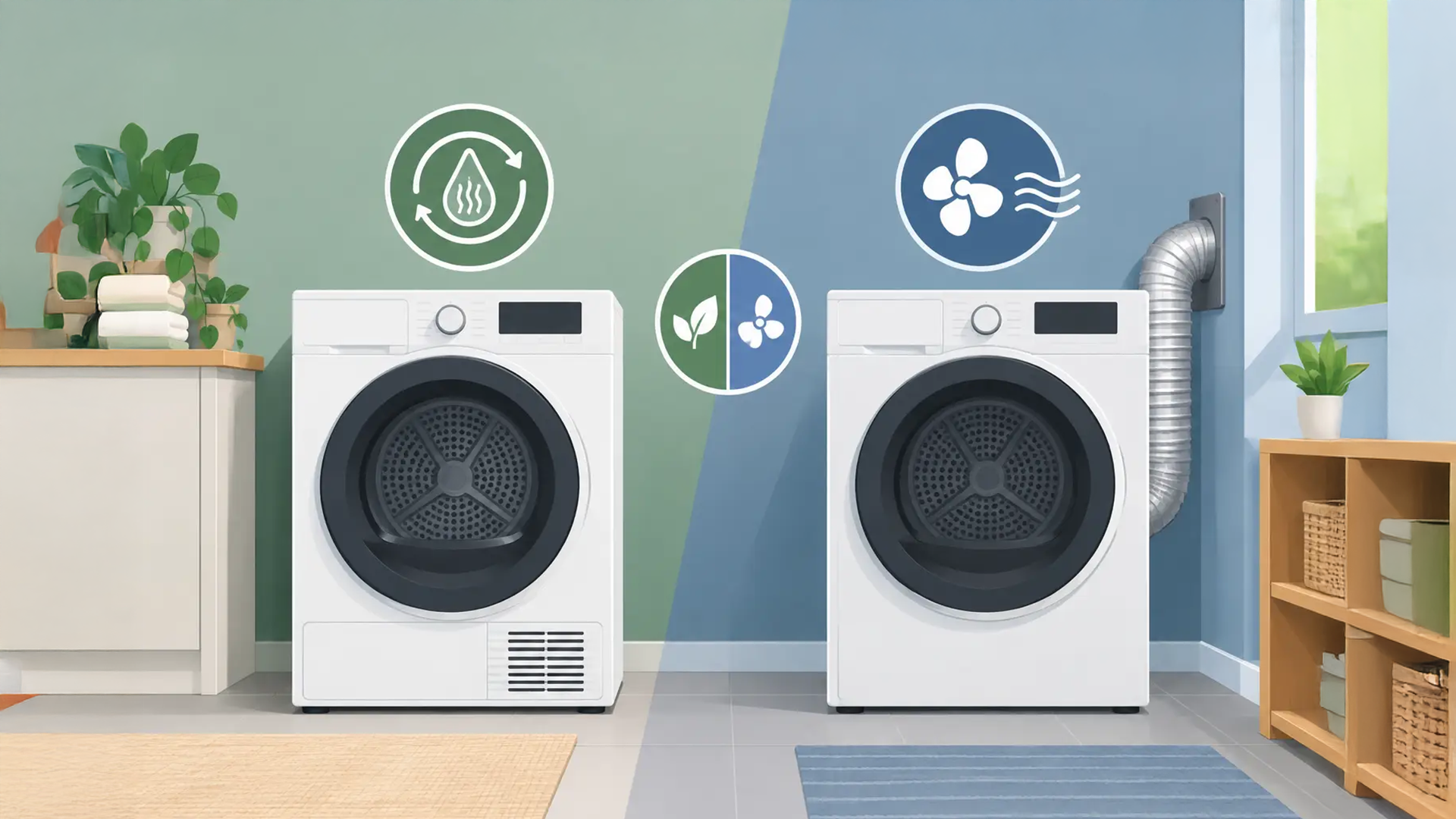
A traditional vented dryer heats air, tumbles clothing, and sends the warm, moisture-filled air outdoors through ductwork. Most conventional electric dryers work this way, as do gas dryers. The system is familiar, effective, and widely available in a broad range of capacities and price points.
A heat pump dryer uses a closed-loop system. Instead of pushing humid air outside, it removes moisture from the air inside the drum, condenses that moisture into a tank or drain line, and recirculates the air. This process uses lower temperatures and requires no exterior dryer vent.
That difference affects nearly every part of the ownership experience. A heat pump dryer can fit in more locations and use considerably less energy. A vented dryer usually offers faster cycles and a lower upfront cost, provided the home already has safe, properly sized venting in place.
Heat Pump Versus Vented Dryers: Key Differences
Energy use and operating cost
Heat pump dryers are among the most efficient drying options available. Because they reuse warm air rather than continuously heating and exhausting it, they can use substantially less electricity than a conventional electric vented dryer. For households that run several loads each week, the reduction in energy consumption can add up over the life of the appliance.
The actual savings depend on local utility rates, laundry habits, load size, and the model selected. A heat pump dryer costs more initially, so it is best viewed as a long-term efficiency purchase rather than the lowest-cost replacement. Energy-efficient models may also qualify for available utility incentives or manufacturer promotions, depending on your area and timing.
Vented dryers use more energy, particularly standard electric models with resistance heating elements. Their advantage is simplicity: if a vented dryer is replacing another vented dryer and the duct system is in good condition, the installation may require less planning and lower initial expense.
Drying time
This is often the deciding factor for busy households. Vented dryers generally dry loads faster because they use higher heat and continuously exhaust moisture outdoors. A typical load may finish in roughly 40 to 60 minutes, though results vary with fabric type, dryer capacity, vent length, and how well the washer spins out water.
Heat pump dryers tend to take longer, especially on older or smaller models. A normal cycle may run 90 minutes or longer. Newer premium models have improved cycle performance with moisture sensors, larger drums, and more advanced airflow systems, but they are still not always the best match for a household that needs to wash, dry, fold, and repeat several large loads in one afternoon.
Longer cycle times are less of a concern for families that run laundry overnight, during the workday, or on a regular schedule. They can be more noticeable when drying bulky towels, bedding, or back-to-back loads for a large household.
Installation requirements
A vented dryer needs a dedicated exterior vent path. The duct should be metal, routed as directly as practical, and properly maintained. Long duct runs, multiple bends, crushed flexible connections, or a blocked exterior hood can reduce drying performance and create a fire risk. A professional should inspect older venting before a new dryer is installed.
A heat pump dryer does not need an exterior exhaust vent. That makes it an appealing option for apartments, interior laundry closets, basement conversions, additions, and homes where adding new ductwork would be difficult or expensive. Depending on the model, collected water is emptied from an internal reservoir or directed to a nearby drain.
Do not assume that ventless means installation-free. Heat pump dryers still need the correct electrical connection, sufficient room for air circulation, a level floor, and access for service. Stacked configurations, closet installations, and washer-dryer pairs should be planned around the manufacturer’s required clearances. Local codes and building requirements also matter, especially for renovation and new-construction projects.
Fabric care and heat exposure
Heat pump dryers operate at lower temperatures than conventional vented dryers. That gentler approach can be easier on many everyday items, including athletic wear, delicates, knits, and clothing with stretch fibers. Less heat exposure may help reduce shrinkage, fading, and wear over time.
A vented dryer can still provide excellent fabric care when its sensor-dry settings are used correctly. The concern is not that every vented dryer is too harsh, but that high-heat timed cycles can overdry fabrics. Choosing a model with reliable moisture sensing and separate cycles for towels, normal loads, delicates, and bulky items gives you more control.
For households that regularly dry performance clothing, business attire, or higher-value garments, the gentler operation of a heat pump dryer is a meaningful benefit. For those focused on work clothes, towels, and quick family loads, a quality vented dryer may deliver the speed and capacity they value most.
Maintenance needs
Every dryer needs regular attention. With a vented dryer, clean the lint screen after every load and have the vent system inspected and cleaned periodically. Lint accumulation in the duct restricts airflow, increases drying time, and can become a safety concern. This maintenance is especially important in homes with long vents or frequent laundry use.
Heat pump dryers also require lint-filter cleaning after each load, and their condenser or secondary filter system may need regular cleaning according to the manufacturer’s instructions. Some models offer self-cleaning condensers, while others require more hands-on care. If the unit uses a water tank rather than a drain connection, that tank must be emptied.
Neither option is maintenance-free. The better choice is the one your household can maintain consistently and install correctly.
Cost, Capacity, and the Laundry Room Plan
Vented dryers generally offer more choices at entry and midrange price points. They are also available in a wide selection of full-size capacities, making them a practical fit for larger families. If you already have a compatible electric outlet or gas line, proper exterior venting, and a washer with a large drum, a full-size vented dryer can be a cost-effective replacement.
Heat pump dryers are often positioned at midrange and premium price points. Their higher purchase cost can be easier to justify when vent installation would require major construction, when energy efficiency is a priority, or when the laundry room is located away from an exterior wall. Compact heat pump units are particularly useful in smaller homes and condo-style layouts, though full-size options are increasingly available.
Capacity deserves close attention. A dryer should generally match the washer’s capacity so clothing has enough room to tumble. A small dryer paired with a large-capacity washer can lead to split loads and longer laundry days. Builders, designers, and homeowners planning cabinetry should also confirm door swing, stacked dimensions, drain access, and service clearance before finalizing the layout.
Which Dryer Is Right for Your Home?
Choose a vented dryer when fast cycle times, large-load capacity, and lower upfront cost are the priorities, and your home has a safe, accessible exterior vent. It is often the practical choice for active families, homes with heavy weekly laundry volume, and straightforward replacement projects.
Choose a heat pump dryer when avoiding new vent construction, reducing electricity use, or treating clothes more gently matters most. It is especially well suited to interior laundry spaces, compact layouts, energy-focused renovations, and households comfortable with longer cycles.
Gas dryer shoppers should be especially careful: gas models require exterior venting and are not interchangeable with ventless heat pump dryers. Your available utility connections, electrical service, and installation location should guide the comparison before you narrow down brands, finishes, and special features.
For a high-ticket appliance purchase, the best answer is rarely just the dryer with the lowest price or the shortest cycle. Bring your room dimensions, utility details, washer model, and laundry habits to the conversation. The appliance specialists at Plesser’s can help match those details to a dryer configuration that works for your space now and your household for years to come.
Take Your Appliance
Knowledge from Good to Great
Just Ask Al is your go-to expert platform to connect, share, and learn — together. Join the Community on Facebook to get expert insights, tips, and more.
Collaborate with fellow appliance enthusiasts today!
38,000+ members and growing
Join the community today—everyone is welcome!


Take Your Appliance Knowledge With You On The Go!
Just Ask Al is your go-to expert platform to connect, share, and learn — together. Join the Community on Facebook to get expert insights, tips, and more.
Collaborate with fellow appliance enthusiasts today!