How to Clean and Maintain Your Dishwasher for Peak Performance
This article was generated using AI and reviewed by a human editor for quality and accuracy.
A dishwasher is one of the most convenient appliances in any kitchen, but regular cleaning and maintenance are essential for keeping it running efficiently and extending its lifespan. Over time, food debris, grease, and mineral deposits can accumulate, leading to unpleasant odors, poor cleaning performance, and even mechanical issues. Follow this comprehensive guide to ensure your dishwasher stays in top condition.
Why Regular Dishwasher Maintenance Matters
Neglecting dishwasher maintenance can lead to several issues, including:
- Reduced Cleaning Efficiency – Clogged spray arms and filters hinder water circulation, leaving dishes dirty.
- Unpleasant Odors – Food particles trapped in the filter or drain can cause unpleasant smells.
- Limescale Buildup – Hard water deposits reduce efficiency and damage internal components.
- Potential Breakdowns – Lack of cleaning can lead to mechanical failures, resulting in costly repairs.
To avoid these problems, incorporate the following cleaning and maintenance routines into your schedule.
Daily Maintenance Tips
- Scrape Off Food Residue – Before loading your dishes, scrape off any large food particles to prevent clogging the filters and spray arms.
- Run Hot Water Before Starting – Let hot water run from your kitchen faucet for a few seconds before starting a wash cycle. This precaution ensures the dishwasher begins with hot water, improving its efficiency.
- Use the Right Detergent – To prevent residue buildup, always use a high-quality detergent suitable for your dishwasher model.
- Ensure Proper Loading – Overloading the dishwasher can prevent water from reaching all surfaces, while incorrect placement can block spray arms. Arrange dishes strategically for optimal cleaning.
Weekly Cleaning Routine
1. Clean the Filter
Most modern dishwashers have a removable filter that traps food particles. To clean it:
- Remove the lower rack and locate the filter at the bottom.
- Twist and lift it out (refer to your user manual if necessary).
- Rinse it under warm water and scrub with a soft brush if needed.
- Reinstall it securely before running the dishwasher.
A clogged filter is one of the leading causes of poor cleaning performance and odors, so this step is crucial.
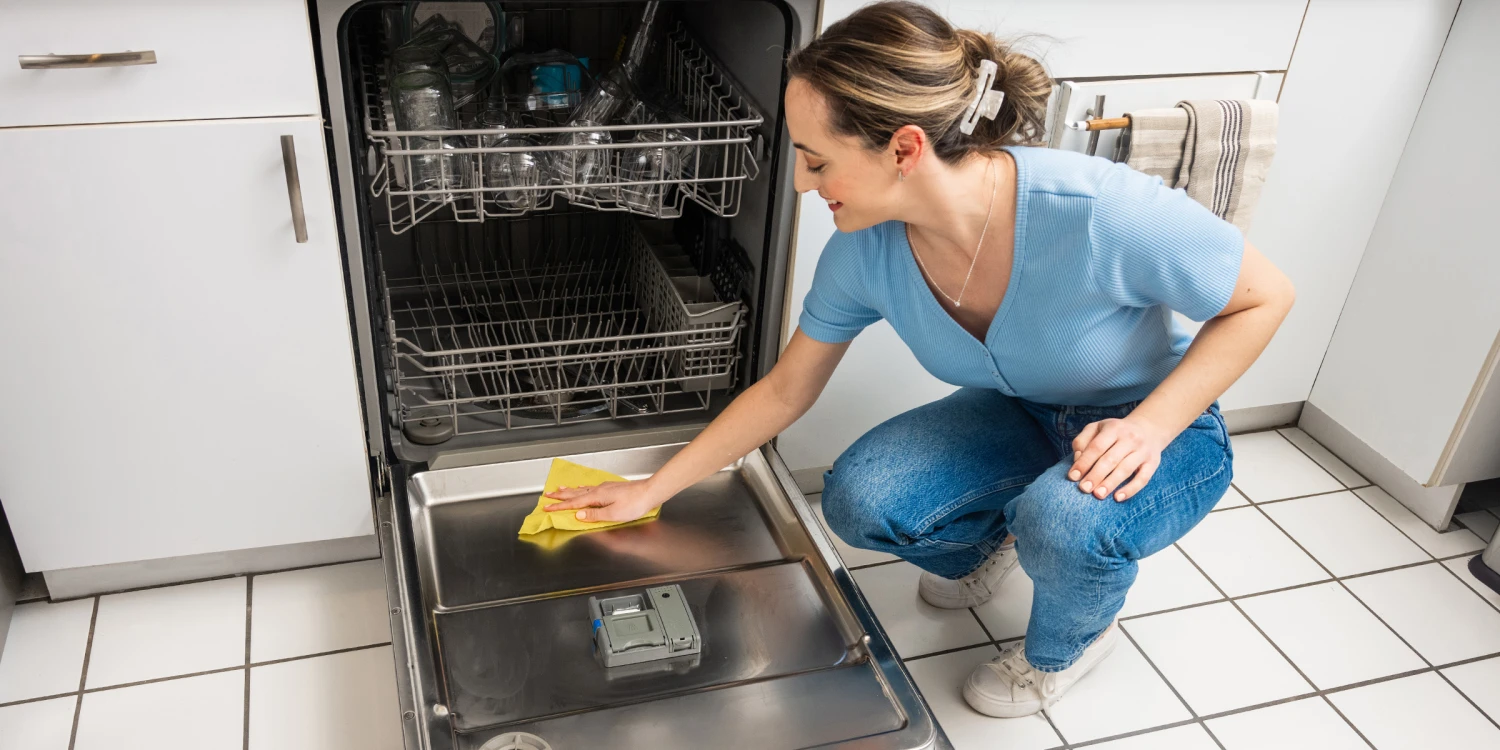
2. Wipe the Door and Seals
The door and rubber gaskets can accumulate grime and mold. Clean them with a damp cloth and mild dish soap, focusing on:
- The edges of the door
- The rubber gasket around the door
- The detergent dispenser
For stubborn grime, use a toothbrush dipped in baking soda and water.
Monthly Deep Cleaning
1. Run a Vinegar Wash
White vinegar is excellent for removing grease, odors, and mineral deposits. To clean your dishwasher:
- Place a cup of white vinegar in a dishwasher-safe bowl on the top rack.
- Run a hot water cycle without detergent or dishes. This solution helps break down limescale and deodorizes the interior.
2. Use Baking Soda for Extra Freshness
After the vinegar cycle:
- Sprinkle one cup of baking soda across the bottom of the dishwasher.
- Run a short hot water cycle to eliminate stains and odors.
This step also helps brighten the dishwasher interior.
3. Inspect and Clean Spray Arms
The spray arms are responsible for distributing water throughout the dishwasher. If clogged, they can reduce cleaning efficiency. To maintain them:
- Remove the spray arms (check your manual for instructions).
- Use a toothpick or small brush to clear debris from the holes.
- Rinse thoroughly and reinstall.
Seasonal Maintenance (Every 3-6 Months)
1. Check for Hard Water Buildup
You may have hard water buildup if you notice a white, chalky residue on your dishes or the dishwasher interior. Using a dishwasher cleaner specifically designed for removing limescale can help prevent this. Alternatively, a rinse aid can help reduce spotting and mineral buildup.
2. Inspect Hoses and Connections
Leaks and blockages can occur in the water supply and drain hoses. Check for:
- Kinks or cracks in the hoses
- Loose connections that may cause leaks
- Any obstructions in the drain hose
If your dishwasher drains slowly, use a plumber’s snake or drain cleaner to clear any blockages.
3. Test the Heating Element
To ensure your dishwasher is drying efficiently, check the heating element by running a cycle and feeling the inside after completion. If dishes remain wet, you may need to inspect the heating element or adjust the rinse aid settings.
Additional Tips for Optimal Performance
- Use a Rinse Aid – This helps dishes dry faster and prevents water spots from forming.
- Avoid Overloading – Proper spacing ensures water reaches all surfaces for thorough cleaning.
- Run Full Loads – This conserves water and energy while maximizing efficiency.
- Use the Right Cycle – Select heavy-duty cycles for pots and pans, eco-friendly modes for energy saving, and sanitizing cycles for extra cleanliness.
- Check Water Temperature – Dishwashers perform best at 120°F (49°C). If your water is cooler, adjust your water heater settings.
- Avoid Excess Detergent – Too much detergent can leave a residue on dishes and clog the dishwasher.
Troubleshooting Common Dishwasher Issues
Even with proper maintenance, issues may arise. Here are some common problems and solutions:
- Dishes Are Still Dirty – Ensure spray arms are not blocked, filters are clean, and water temperature is hot enough.
- Cloudy Glassware – Hard water can cause this; use a rinse aid or a specialized glassware detergent to prevent it.
- Foul Odors – Run a vinegar and baking soda wash, and ensure no food debris is stuck in the filter or drain.
- Dishwasher Not Draining – Check for clogs in the drain hose and clean the filter.
- Leaking Dishwasher – Inspect door seals and hose connections for leaks.
Final Thoughts
A well-maintained dishwasher cleans effectively and lasts longer, saving you time and repair costs. Following regular maintenance steps, you can keep your dishwasher running efficiently for years.
FAQs
How often should I clean my dishwasher filter?
Clean the filter at least once a week to avoid clogs and odors.
Can I use bleach to clean my dishwasher?
Bleach should be used only in non-stainless steel dishwashers, as it can corrode metal. White vinegar is a safer option.
Why does my dishwasher smell?
Foul odors often come from trapped food particles. Regular cleaning with vinegar and baking soda can help.
What if my dishwasher isn’t drying dishes properly?
Check the rinse aid levels and heating element, and ensure you’re using the right drying cycle.
How can I prevent hard water stains?
Use a rinse aid, run a monthly vinegar wash, and consider installing a water softener.
Take Your Appliance
Knowledge from Good to Great
Just Ask Al is your go-to expert platform to connect, share, and learn — together. Join the Community on Facebook to get expert insights, tips, and more.
Collaborate with fellow appliance enthusiasts today!
38,000+ members and growing
Join the community today—everyone is welcome!


Take Your Appliance Knowledge With You On The Go!
Just Ask Al is your go-to expert platform to connect, share, and learn — together. Join the Community on Facebook to get expert insights, tips, and more.
Collaborate with fellow appliance enthusiasts today!