Induction Range vs Gas Range: Which Fits?
This article was generated using AI and reviewed by a human editor for quality and accuracy.
If you're replacing a range during a kitchen remodel or because your current unit has finally given out, the induction range vs gas range question usually comes down to more than cooking style. It affects ventilation, cookware, cleaning, installation, utility costs, and how the kitchen feels day to day. For some households, the right answer is obvious. For others, it depends on how you cook, what your home is set up for, and how much flexibility you want in the final appliance package.
Induction range vs gas range at a glance
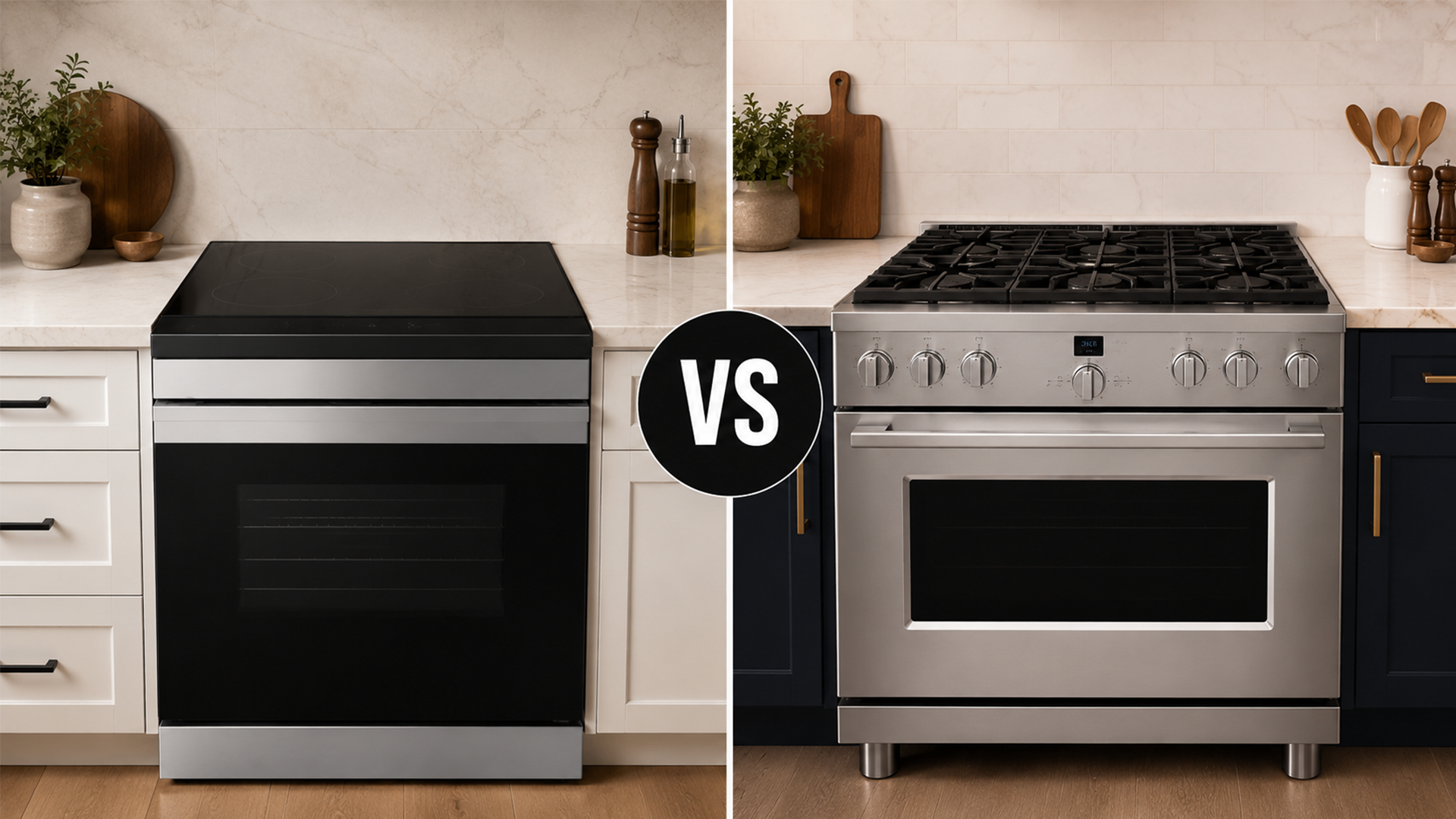
Induction and gas both appeal to serious home cooks, but they get there in very different ways. A gas range uses an open flame to heat cookware. An induction range uses electromagnetic energy to heat compatible pans directly, while the cooktop surface itself stays relatively cooler.
That difference changes the cooking experience immediately. Gas gives you visible flame control and works with a wide range of cookware. Induction is faster to boil, more precise at low temperatures, and typically easier to clean. Neither is automatically better in every kitchen.
What cooking performance really feels like
For many buyers, performance is the first filter. Gas has long been favored for its familiar response. Turn the knob up, the flame gets bigger. Turn it down, the flame drops. If you like cooking by sight and feel, gas still has a strong advantage in familiarity alone.
Induction, however, has become a top choice for buyers who want speed and precision. Water generally boils faster on induction than on gas, and temperature adjustments happen quickly because the pan itself is being heated directly. That can make a noticeable difference when you're searing, simmering delicate sauces, or trying to keep a pot at a stable low heat.
There is one trade-off worth noting. Some cooks prefer gas for tasks that involve charring, wok cooking, or using cookware that isn't perfectly flat. Induction performs best with flat-bottom magnetic cookware, so the cooking style and the pans you already own matter.
Heat, comfort, and kitchen environment
A range does not just cook food. It changes the feel of the room. Gas produces ambient heat, and that becomes more noticeable if you're cooking multiple dishes or spending long stretches at the stove. In a busy family kitchen, especially during summer or holiday cooking, that extra heat can affect comfort.
Induction runs cooler overall because less heat escapes into the room. That can make the kitchen more comfortable and can also reduce the amount of lingering heat around the cooking surface. For open-concept homes or smaller kitchens, this is often a bigger benefit than buyers expect at first.
Ventilation still matters with both, especially for smoke, grease, and cooking odors. But gas adds combustion byproducts, which makes proper ventilation an even more important part of the planning process.
Cleaning and everyday upkeep
This is one of the most practical parts of the decision. Gas cooktops have grates, burner caps, and more crevices where grease and spills can collect. Cleaning is manageable, but it takes more effort and usually more disassembly.
Induction ranges are simpler to wipe down because the surface is smooth. Since the cooktop doesn't get as hot as a traditional radiant electric surface, spills are less likely to bake on. For households that cook often but do not want a lot of cleanup after every meal, induction has a clear convenience advantage.
That said, smooth surfaces can show smudges and scratches more easily, so the easier cleanup comes with a little more need for careful cookware handling.
Safety considerations for busy households
Safety often moves higher on the list when there are children at home, older adults in the household, or a general desire for fewer kitchen hazards. Gas involves an open flame, hot grates, and the possibility of a burner being left on if someone is distracted.
Induction ranges are often attractive from a safety standpoint because there is no live flame. The surface around the pan tends to stay cooler than gas or standard electric, and many models include pan detection, control lock features, and automatic shutoff functions.
This does not mean induction is risk-free. The cookware itself still gets hot, and the area under the pan holds residual heat. But for many families, the overall safety profile is one of induction's strongest selling points.
Installation, fuel source, and what your kitchen already supports
The best range on paper is not always the best range for your home. Gas ranges require a gas line, and depending on the model, you may also need a standard electrical connection for ignition, lights, or electronics. If your kitchen is already set up for gas, replacing an older gas unit can be straightforward.
Induction ranges require the right electrical service, typically a 240-volt connection. If you're switching from gas to induction, electrical upgrades may be needed. If you're moving in the opposite direction, adding or extending a gas line can affect the total project cost.
That is why installation should be part of the buying decision early, not after you've chosen a model. In remodels and new construction, either option can be planned for. In simple replacement purchases, the home's existing setup often narrows the smartest choice.
Cookware compatibility and hidden costs
Gas is forgiving. It works with cast iron, stainless steel, aluminum, copper, and specialty cookware with very few limitations. If you already have a mixed collection of pots and pans, gas lets you keep using almost all of it.
Induction requires magnetic cookware. Many stainless steel and cast iron pieces are compatible, but not all are. Aluminum, glass, and some clad cookware may not work unless specifically designed for induction.
This is one of the most common hidden costs in the induction range vs gas range discussion. If you need to replace a meaningful part of your cookware collection, that should be added to the appliance budget. For some buyers, that is a small issue. For others, especially in a full kitchen package purchase, it can be enough to shift the decision.
Operating costs and efficiency
Induction is generally more energy efficient because more of the energy goes directly into the pan instead of escaping into the air. Over time, that can help reduce wasted heat and improve cooking efficiency.
Gas prices and electricity rates vary by region, so monthly operating costs are not the same in every market. In some homes, gas may still be the lower-cost fuel source. In others, induction can be competitive or better, especially when paired with how quickly it heats.
The bigger financial difference often comes from the full ownership picture, not just utility bills. Installation requirements, cookware changes, ventilation considerations, and the price of the appliance itself should all be compared together.
Which type of buyer usually prefers each option
Gas often makes the most sense for homeowners who already have a gas connection, want familiar burner control, use a wide range of cookware, or prefer a lower-friction replacement. It also remains a strong fit for cooks who like visual flame adjustment and for projects where maintaining consistency with other gas appliances matters.
Induction is often the better fit for buyers who want faster boiling, easier cleanup, a cooler kitchen, and more modern safety features. It also appeals to design-conscious remodelers who want a sleek look and to households that prioritize precision for everyday cooking.
For many renovation clients, the decision is tied to the whole kitchen plan. Countertop materials, ventilation strategy, electrical capacity, cookware, and overall appliance package all affect what makes sense. That is one reason buyers often benefit from comparing models across both mainstream and premium brands before deciding.
How to make the final choice
If your top priority is familiarity and flexibility, gas is still a very strong option. If your top priority is speed, cleanability, and a more controlled cooking surface, induction deserves serious consideration.
When customers compare these categories at Plesser's Appliances, the most successful purchases usually come from looking beyond headline features. Think about who cooks in the home, how often the range gets used, whether you're replacing cookware, and what your kitchen can support without expensive changes. The right range should fit the way your household actually cooks, not just the way a product spec sheet sounds.
A good range earns its place every day, so the best choice is the one that makes dinner easier on a Tuesday night and still holds up when the kitchen is full on a holiday weekend.
Take Your Appliance
Knowledge from Good to Great
Just Ask Al is your go-to expert platform to connect, share, and learn — together. Join the Community on Facebook to get expert insights, tips, and more.
Collaborate with fellow appliance enthusiasts today!
38,000+ members and growing
Join the community today—everyone is welcome!


Take Your Appliance Knowledge With You On The Go!
Just Ask Al is your go-to expert platform to connect, share, and learn — together. Join the Community on Facebook to get expert insights, tips, and more.
Collaborate with fellow appliance enthusiasts today!