Induction Versus Electric Cooktops: Which Fits?
This article was written by Logan H. and reviewed with assistance from AI tools for clarity and accuracy.
A cooktop can change how a kitchen feels every day. The right surface gives a busy family faster weeknight meals, gives an enthusiastic home cook better control, and gives a remodeler a clean, intentional finish. When comparing induction versus electric cooktops, the most meaningful differences come down to how they heat, how you cook, what cookware you own, and what your home can support.
Both options offer a sleek built-in appearance and are available in sizes and configurations for everything from compact kitchens to large renovation projects. The better choice is not always the most expensive one. It is the one that fits your cooking habits, electrical setup, budget, and expectations for cleanup and control.
How Induction and Electric Cooktops Heat
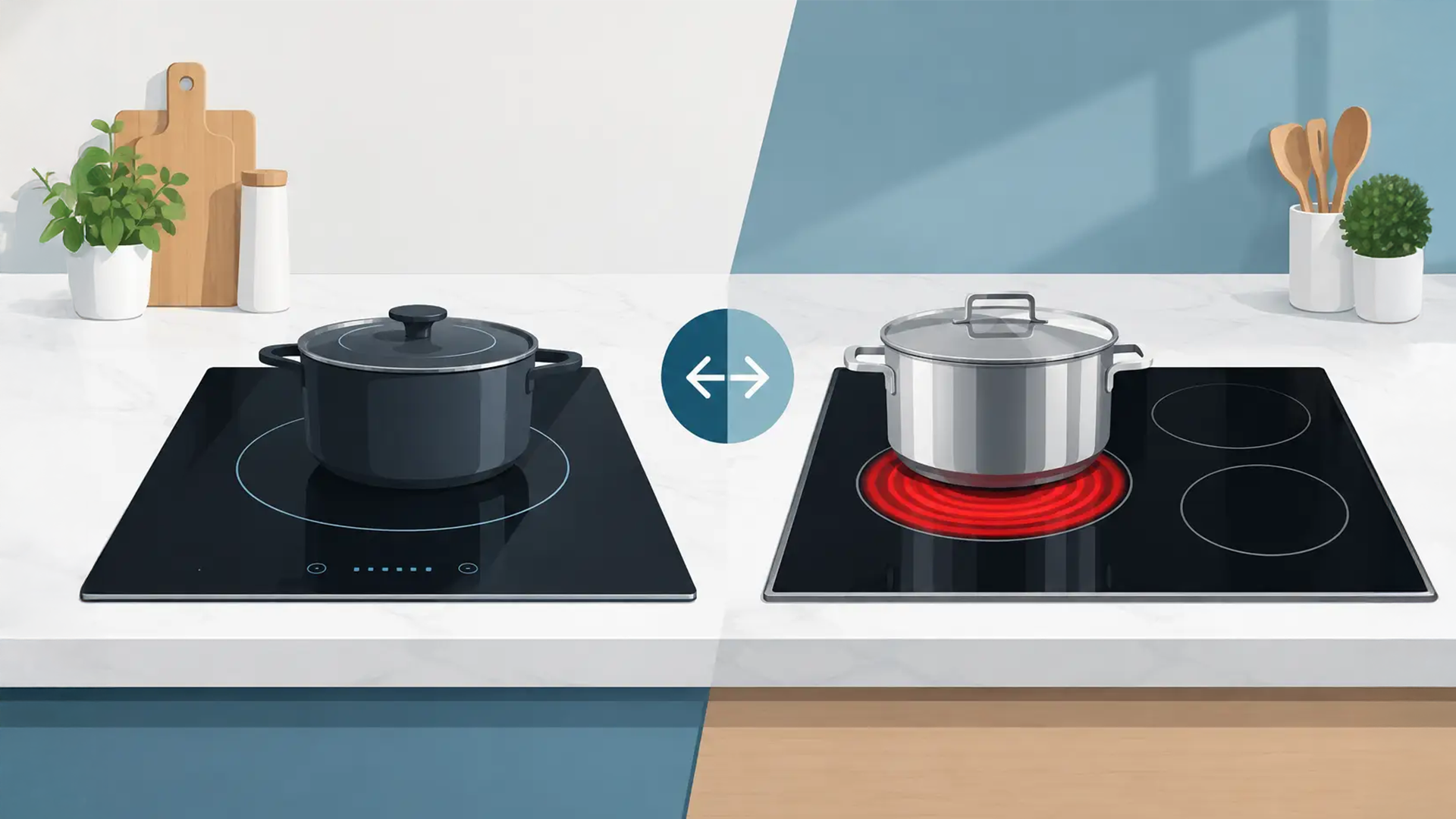
A traditional electric cooktop uses radiant elements beneath a smooth glass-ceramic surface. Once a cooking zone is turned on, the element heats the glass, and the hot glass transfers heat to the pot or pan. The surface remains hot after cooking and needs time to cool down.
Induction cooktops work differently. Magnetic energy creates heat directly in compatible cookware, rather than first heating the cooktop surface. The pan becomes the heat source, while the area around it stays comparatively cool. The glass can still become warm from contact with a hot pan, but it does not retain heat in the same way as a radiant electric element.
That difference affects nearly every part of ownership, from boiling water and simmering sauces to cleaning up after dinner.
Induction Versus Electric Cooktops: Daily Performance
For households that cook frequently, induction is usually the stronger performer. It responds quickly when you raise or lower the heat, much like gas, while delivering the clean appearance of a smooth electric surface. A large pot of water can reach a boil faster, and delicate tasks such as melting chocolate or holding a low simmer can feel more controlled on a quality induction model.
Radiant electric cooktops can still produce excellent results, especially with well-designed elements and responsive controls. They may take longer to heat and cool, however, so cooks need to account for residual heat. Turning a radiant element down does not immediately stop heat from reaching the pan. For everyday cooking, that learning curve is manageable, but it can be frustrating for recipes that require quick temperature changes.
Electric cooktops also vary widely by model. Many feature expandable elements for large pans, bridge elements for griddles, warming zones, and touch controls. Higher-end radiant units may narrow the performance gap for some cooking tasks, although they cannot match the direct pan heating of induction.
Speed and temperature control
Induction is particularly appealing for shoppers replacing gas who want quick response without adding a gas line or ventilation considerations associated with open-flame cooking. The ability to move from a rolling boil to a gentle simmer promptly can make a noticeable difference in a busy kitchen.
Radiant electric is a practical choice for cooks who prefer familiar operation and do not need the fastest possible heat response. It is also widely available across a broad range of price points, finishes, and configurations.
Safety around children and busy kitchens
Induction offers a meaningful safety advantage because the cooking zone is not actively heating without compatible cookware on it. The surface still deserves caution after use, but there is less exposed retained heat than with a radiant electric cooktop. This can be valuable for families with young children, multigenerational households, and kitchens where several people are moving around at once.
Both types commonly include hot-surface indicators, control locks, timers, and automatic shutoff features. Those features should be compared model by model, particularly when safety and accessibility are priorities.
Cookware Is the Biggest Induction Question
Induction requires magnetic cookware. Cast iron, enameled cast iron, and many stainless steel pans work well. Aluminum, copper, glass, and ceramic cookware generally will not work unless they have a magnetic base designed for induction.
A simple test is to hold a magnet to the bottom of a pan. If it sticks firmly, the pan is likely induction compatible. Flat-bottom cookware also matters. A warped pan may heat unevenly on any smooth cooktop, but induction performance is especially dependent on good contact between the pan and the cooking zone.
Radiant electric cooktops are less restrictive. Most flat-bottom cookware can be used, including aluminum, copper, stainless steel, cast iron, and glass cookware rated for cooktop use. That flexibility can make electric an easier replacement choice for homeowners who have invested in a varied cookware collection and do not want to replace it.
Cast iron deserves extra care on either glass surface. It performs well, but its weight and rough underside can scratch the cooktop if dragged. Lift rather than slide heavy cookware, and keep the bottom of pans clean and dry.
Installation, Electrical Requirements, and Kitchen Planning
Most full-size induction and electric cooktops require a dedicated 240-volt electrical circuit. The exact amperage, breaker size, and cutout dimensions depend on the model, so these details should be confirmed before purchase. A cooktop replacement is often straightforward when the existing opening and electrical service match, but remodels can involve cabinet modifications or electrical work.
Induction may require greater electrical capacity than an older radiant cooktop, especially for wider models with multiple high-output zones. Do not assume an existing circuit is adequate simply because it served the previous appliance. Reviewing specifications with a qualified installer before delivery helps avoid delays on installation day.
For kitchen renovations, consider the full cooking setup. A cooktop may be paired with a wall oven, a separate ventilation system, or cabinetry designed around a particular width. Common sizes include 30 and 36 inches, but burner layout is just as important as overall width. A 30-inch cooktop with a flexible bridge zone may suit one household better than a wider model with fixed, smaller elements.
Cost, Energy Use, and Long-Term Value
Radiant electric cooktops usually have a lower starting price than comparable induction models. That can make them a smart choice for a rental property, a simple replacement, a secondary kitchen, or a project with a tightly defined appliance budget.
Induction typically costs more upfront, but it can offer value through faster cooking, precise control, and efficient energy transfer. Because heat is generated in the pan, less energy is lost to the surrounding air and cooktop surface. Exact savings depend on how often you cook, local utility costs, and the model you choose, so it is best viewed as an efficiency benefit rather than a guaranteed payback calculation.
Premium induction cooktops can also bring features that appeal to serious cooks and design-focused projects, such as flexible zones that accommodate different pan sizes, automatic pan detection, guided cooking functions, and integrated ventilation options. Those features can be worthwhile when they solve a real cooking or layout need, not simply because they are available.
Cleaning and Care for Smooth Cooktop Surfaces
Both induction and radiant electric cooktops offer a cleaner built-in look than traditional exposed-coil models. Daily care is similar: let the surface cool, wipe away spills with a soft cloth, and use a cooktop cleaner recommended for glass-ceramic surfaces when needed.
Induction can be easier to maintain after messy cooking because spills are less likely to bake onto a very hot cooking zone. On a radiant electric cooktop, sugary spills and starchy boil-overs should be addressed promptly and according to the manufacturer's care instructions. Avoid abrasive pads and do not use the cooktop as extra counter space.
A clean pan bottom is one of the simplest ways to protect either surface. Residue can burn onto the glass or create marks that require more effort to remove.
Which Cooktop Is Right for Your Home?
Choose induction if fast heat, responsive control, lower retained surface heat, and cooking efficiency are high priorities. It is an especially strong option for frequent cooks, families seeking added safety, and homeowners planning a premium kitchen update. Before committing, check your cookware and confirm the electrical requirements.
Choose radiant electric if you want a familiar smooth-top experience, broad cookware compatibility, and a lower initial cost. It remains a dependable, attractive solution for many kitchens, particularly when replacing an existing electric cooktop without changing the electrical setup.
For a renovation or high-value appliance purchase, comparing the actual models matters as much as choosing the technology. At Plesser's Appliances, shoppers can evaluate cooktop sizes, control styles, cooking-zone layouts, and finish options with the practical details of delivery and installation in mind.
The best next step is to look at the pans you use most, measure the available cutout, and think honestly about how you cook on a typical Tuesday night. That practical check will point you toward a cooktop that feels right long after the remodel is complete.
Take Your Appliance
Knowledge from Good to Great
Just Ask Al is your go-to expert platform to connect, share, and learn — together. Join the Community on Facebook to get expert insights, tips, and more.
Collaborate with fellow appliance enthusiasts today!
38,000+ members and growing
Join the community today—everyone is welcome!


Take Your Appliance Knowledge With You On The Go!
Just Ask Al is your go-to expert platform to connect, share, and learn — together. Join the Community on Facebook to get expert insights, tips, and more.
Collaborate with fellow appliance enthusiasts today!
