Range Hood Sizes Explained for Your Kitchen
This article was written by Logan H. and reviewed with assistance from AI tools for clarity and accuracy.
A range hood can look properly sized in a product photo and still miss smoke at the front burners, crowd a cabinet layout, or hang too low over a powerful cooktop. The right choice is not simply the widest or highest-CFM model available. Range hood sizes explained starts with the cooking surface, then accounts for hood depth, installation height, kitchen layout, and the way you actually cook.
For a quick kitchen replacement, matching the existing hood width is often the easiest path. For a renovation or new build, it is worth planning the hood around the range before cabinetry and ductwork are finalized. That approach gives you better ventilation performance and a more finished look.
Start With the Width of Your Cooktop
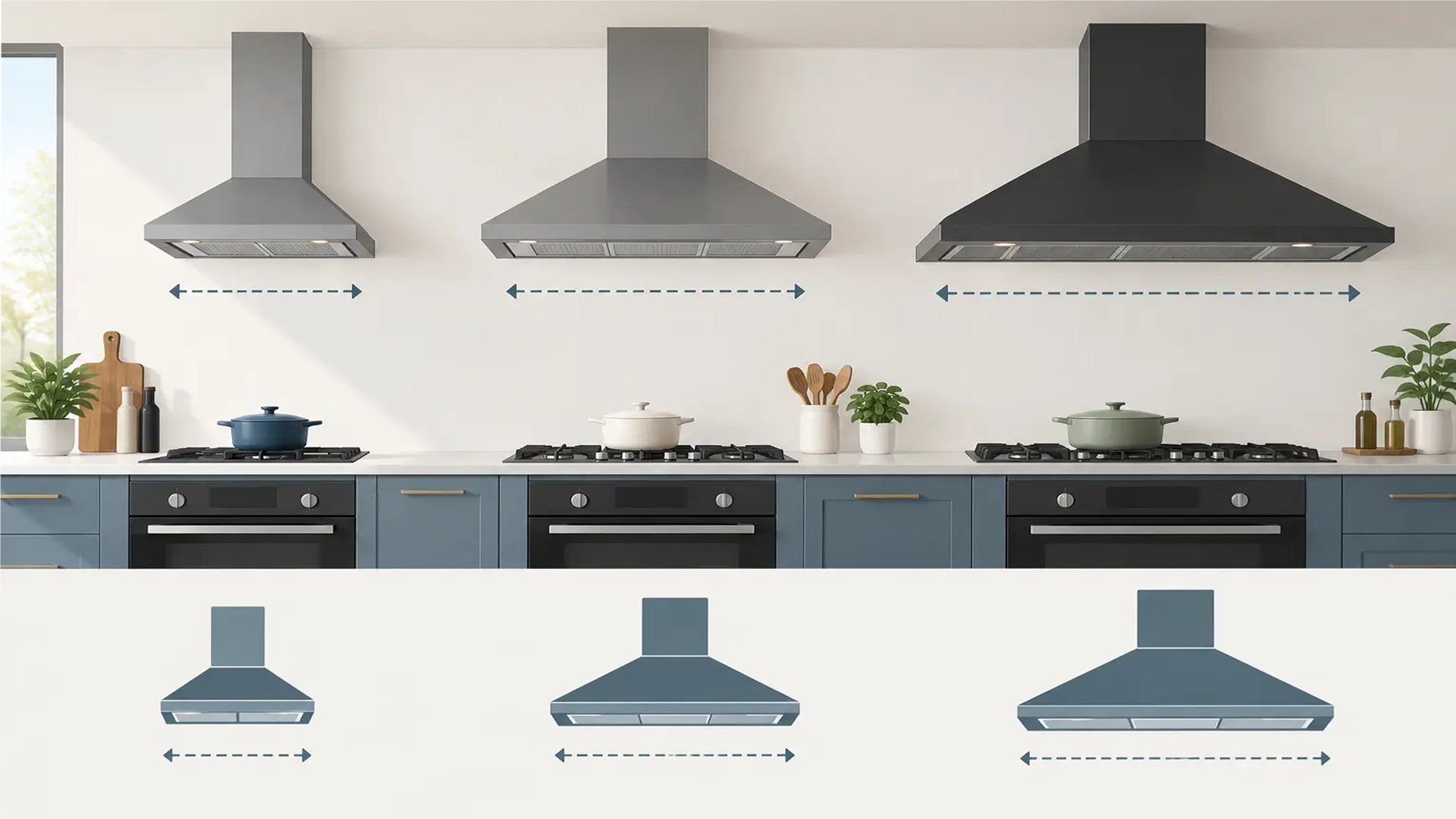
The standard rule is straightforward: a range hood should be at least as wide as the cooking surface it serves. A 30-inch range or cooktop should have a 30-inch hood at minimum. A 36-inch cooking appliance should have a 36-inch hood at minimum.
For wall-mounted hoods, going wider than the cooktop is often a smart upgrade rather than an unnecessary luxury. A 36-inch hood over a 30-inch range provides extra capture area at the sides, where steam and cooking fumes can otherwise escape. This is especially helpful with gas cooking, high-heat searing, wok cooking, griddles, and front-burner use.
A wider hood is not always the right answer. Cabinet widths, ceiling lines, adjacent wall space, and the overall kitchen design may limit your choices. But when space allows, adding 3 inches on each side of the cooktop is a practical target for many wall installations.
Common Range Hood Widths
Most residential hoods are available in 24-, 30-, 36-, 42-, 48-, 54-, and 60-inch widths. The most common pairings are a 30-inch hood with a 30-inch range and a 36-inch hood with a 36-inch range.
Larger widths are common in professional-style kitchens. A 48-inch range, for example, generally calls for a 48-inch hood or a larger model if the kitchen configuration permits it. If the range includes a built-in griddle, grill, or high-output burners, extra hood coverage becomes even more valuable.
Range Hood Sizes Explained Beyond Width
Width gets the most attention, but it is only one part of proper coverage. Hood depth and mounting height have a direct effect on how well ventilation captures heat, grease, odors, and moisture.
Hood Depth Matters at the Front Burners
A typical range is about 25 to 27 inches deep, including the door and handle. The actual cooking surface is shallower, but the front burners still sit well forward of the wall. A shallow hood may cover the rear burners effectively while allowing smoke from the front burners to drift into the room.
Many under-cabinet hoods are approximately 18 to 22 inches deep. These can work well for everyday cooking, particularly when installed at the correct height. For more frequent high-heat cooking, look for a deeper hood that extends farther over the cooking surface.
Wall chimney hoods and custom hood inserts can offer depths of 24 inches or more. That added projection is useful over a pro-style range. It may also be the better choice for an island, where there is no back wall to help contain rising air.
Installation Height Is a Performance and Safety Decision
Most range hood manufacturers specify an installation range measured from the cooking surface to the bottom of the hood. Many standard installations fall between 24 and 30 inches above an electric cooktop, while gas ranges frequently require a minimum clearance of 27 to 30 inches. Always follow the hood and cooking appliance installation instructions, since requirements vary by model.
Mounting a hood too high reduces its ability to capture smoke before it spreads. Mounting it too low can interfere with sightlines, create headroom issues, and conflict with safety clearances. The goal is to stay within the manufacturer’s approved range while positioning the hood as low as is comfortable and appropriate for the kitchen.
Ceiling height can influence the model you choose. A chimney hood may need an extension kit for a 10-foot or taller ceiling. A low ceiling may favor an under-cabinet hood, a compact chimney design, or a cabinet-integrated insert. Confirm these dimensions before ordering, particularly when cabinetry, backsplash, and duct covers are already planned.
Island Hoods Need More Coverage
Island installations require special attention because the hood is exposed on all sides. Cross-breezes from nearby rooms, HVAC registers, open windows, and foot traffic can move cooking fumes away from the capture area.
For this reason, an island hood is often wider and deeper than the cooktop below it. A common guideline is to choose an island hood that extends 3 to 6 inches beyond each side of the cooking surface. Over a 36-inch island range, a 42- or 48-inch hood may deliver better real-world capture than a 36-inch model.
The hood should also have sufficient depth to cover the front of the cooktop. A shallow decorative island hood may look clean and minimal, but its performance may not match a deeper canopy design. For clients who cook often, function should lead the selection.
Match Airflow to the Range and Your Cooking Style
Range hood size and blower power work together. CFM, or cubic feet per minute, measures how much air a hood can move. More CFM can improve smoke and odor removal, but it does not compensate for a hood that is too narrow, too shallow, or mounted too high.
A modest electric range used for light daily cooking may be well served by a lower-CFM hood. A gas range, high-BTU burners, or a professional-style cooking surface generally needs stronger ventilation. Many homeowners shopping for a 36-inch pro range consider hoods in the 600 to 1,200 CFM range, but the right specification depends on the appliance, duct run, local code, and manufacturer recommendations.
Higher airflow also has trade-offs. Powerful blowers can create more sound, require larger ductwork, and may trigger makeup air requirements under local building codes. A properly ducted hood usually performs better than a recirculating model, but ducting should be planned early. Long runs, multiple elbows, and undersized ductwork can reduce airflow substantially.
Recirculating hoods can be a practical solution where exterior venting is not possible, such as certain apartments or condos. They use filters to reduce grease and some odors before returning air to the room. They do not remove heat or moisture as effectively as ducted ventilation, so choosing adequate hood coverage remains particularly important.
Choose the Hood Style After Confirming the Measurements
Once width, depth, height, and ventilation needs are clear, selecting a style becomes easier. Under-cabinet hoods are a popular fit for replacement projects and standard cabinet layouts. Wall chimney hoods create a focal point and work well where no upper cabinetry sits above the range.
Cabinet inserts are designed for custom wood or metal hoods. They give designers flexibility, but the finished enclosure must be sized correctly for the insert, liner, blower, duct connection, and service access. Downdraft ventilation is another option when an overhead hood is not desired, though it may not capture rising smoke as effectively as a properly sized overhead canopy.
Before placing an order, measure the cooktop width, available hood width, cabinet depth, ceiling height, and the distance to the exterior wall or roof exit. Also verify the electrical requirements, duct diameter, and whether a transition piece or chimney extension is needed. These details prevent the costly surprises that can delay an installation.
At Plesser’s Appliances, customers can compare ventilation options across standard, premium, and professional-style kitchen packages while getting guidance that fits the range, kitchen layout, and installation plan.
The best range hood is the one that fits the kitchen on paper and performs when dinner is on the stove. Start with the cooking surface, give yourself enough capture area, and confirm every installation measurement before the cabinets and ductwork are locked in.
Take Your Appliance
Knowledge from Good to Great
Just Ask Al is your go-to expert platform to connect, share, and learn — together. Join the Community on Facebook to get expert insights, tips, and more.
Collaborate with fellow appliance enthusiasts today!
38,000+ members and growing
Join the community today—everyone is welcome!


Take Your Appliance Knowledge With You On The Go!
Just Ask Al is your go-to expert platform to connect, share, and learn — together. Join the Community on Facebook to get expert insights, tips, and more.
Collaborate with fellow appliance enthusiasts today!
