Top Freezer vs Bottom Freezer Compared
This article was written by Logan H. and reviewed with assistance from AI tools for clarity and accuracy.
A refrigerator can look like a straightforward replacement purchase until you are reaching for milk every morning, loading a week’s groceries, or bending to find frozen vegetables. The top freezer vs bottom freezer decision changes how your kitchen works every day. Both styles remain popular because they offer dependable storage without the width, price, or installation requirements of many French-door models. The better choice comes down to what your household uses most, how much space you have, and where you want the most convenient access.
Top Freezer vs Bottom Freezer: The Everyday Difference
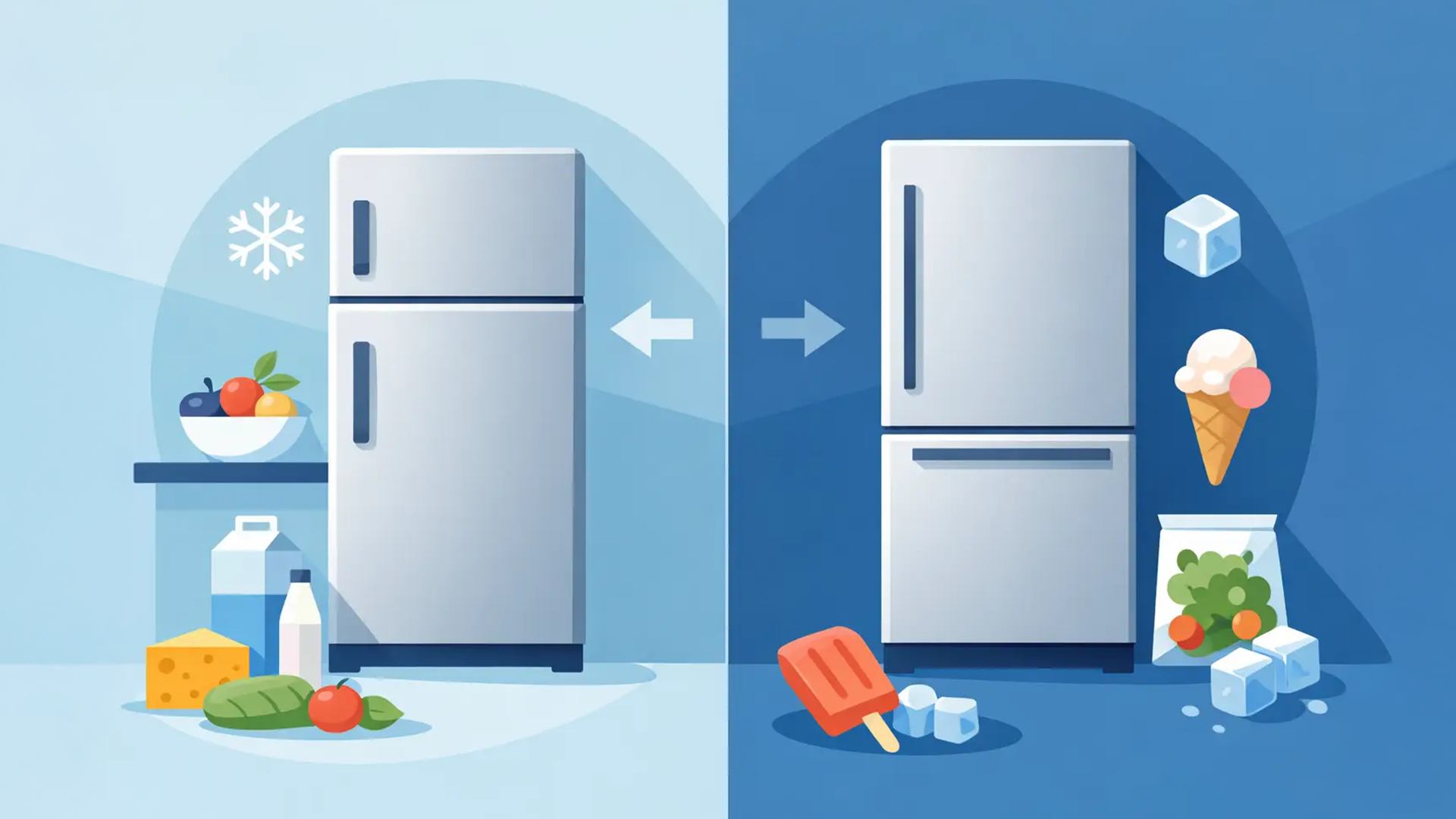
A top-freezer refrigerator places the freezer compartment above the fresh-food section. It is the familiar, traditional layout found in many apartments, first homes, garages, rental properties, and value-focused kitchens. A bottom-freezer refrigerator reverses that arrangement, putting refrigerated food at eye level and frozen food in a pull-out drawer or lower-door compartment.
That difference sounds small, but it affects the items you see, the way you organize groceries, and how often you bend down. Most households open the refrigerator section much more often than the freezer. With a bottom-freezer model, everyday items such as produce, beverages, leftovers, yogurt, and lunch ingredients are easier to reach. With a top-freezer model, frozen food is already at eye level, while fresh food sits lower.
Neither layout is automatically better. A household that cooks from frozen ingredients often may appreciate the top-freezer arrangement. A family that keeps fresh produce, prepared meals, and drinks in frequent rotation may find a bottom freezer more comfortable.
Why a Top-Freezer Refrigerator Still Makes Sense
Top-freezer refrigerators are often the practical choice when price, simplicity, and compact sizing lead the buying decision. They are widely available in narrower widths and smaller capacities, making them especially useful for galley kitchens, utility rooms, secondary spaces, and homes replacing an older refrigerator without changing cabinetry.
Lower upfront cost
In comparable capacities, top-freezer refrigerators are commonly less expensive than bottom-freezer models. The design is straightforward and has been used for decades, so shoppers can often find strong value in basic models with adjustable shelving, humidity-controlled crispers, and efficient LED lighting. If the refrigerator is needed quickly after an unexpected breakdown, a top-freezer unit can be one of the most budget-conscious ways to restore essential food storage.
The lower purchase price can also leave more room in a renovation budget for other priorities, such as a range, dishwasher, ventilation, delivery, or installation. For landlords and homeowners outfitting a rental or second property, that value can be particularly appealing.
Efficient use of smaller spaces
Top-freezer models are frequently offered in apartment-friendly dimensions. Many are less than 30 inches wide, though shoppers should compare each model’s exact width, depth, height, and door-swing clearance before ordering. A compact footprint does not always mean limited usability. Well-designed models can provide ample shelf space for one or two people and manageable freezer storage for everyday staples.
Because the freezer has a door and shelves rather than a deep drawer, it can be easy to see boxed foods and smaller frozen items. This layout works well for shoppers who prefer simple, visible organization over large freezer bins.
A straightforward, familiar layout
There is a reason the top-freezer design has remained a staple. It is easy to understand, easy to use, and often easy to maintain. Some models have fewer convenience features than more premium refrigerator styles, but that can be a benefit for buyers who want dependable cooling without paying for features they may not use.
The trade-off is fresh-food access. Bending to reach produce drawers, deli items, or lower shelves can become tiresome for households that cook often or for anyone with mobility concerns. Tall users may also find the lower refrigerator compartment less comfortable over time.
When a Bottom-Freezer Refrigerator Is Worth It
A bottom-freezer refrigerator is designed around the food most households reach for throughout the day. Fresh items stay in the upper compartment, generally at a more natural viewing and reaching height. That arrangement makes it easier to take inventory before shopping and reduces the chance that produce or leftovers disappear behind lower shelves.
Better access to fresh food
For families that pack lunches, cook several nights a week, or buy a large amount of fresh produce, the bottom-freezer layout can feel more convenient immediately. Salad greens, dairy products, condiments, snacks, and ready-to-eat foods are closer to eye level. The refrigerator compartment is also often arranged with wider shelves and more flexible storage than a similarly sized top-freezer model.
This is not only about comfort. Better visibility can help reduce food waste. When ingredients are easier to see, they are more likely to be used before they spoil. That can matter more over several years of ownership than a modest difference in purchase price.
Freezer drawers can organize bulk items well
Bottom freezers usually use pull-out drawers, baskets, or sliding compartments. This arrangement can be excellent for larger bags of frozen fruit, meat packages, pizzas, and meal-prep containers. Many shoppers prefer being able to pull the freezer toward them instead of searching through a back shelf.
However, drawer storage has a limitation: items can become stacked, especially in smaller-capacity models. Shallow baskets are helpful for categories such as breakfast foods or frozen vegetables, but large or irregularly shaped packages may need more planning. If your freezer is usually packed with bulk purchases, look closely at the bin layout rather than judging capacity by cubic feet alone.
A more updated kitchen appearance
Bottom-freezer refrigerators often have a more contemporary profile. They are available in finishes such as stainless steel, black stainless, white, black, and panel-ready options in select product lines. For a kitchen renovation, this style can offer a cleaner visual fit with modern cabinetry while still maintaining a simpler, narrower form than many French-door refrigerators.
The trade-off is price. Bottom-freezer models generally cost more than comparable top-freezer units, and premium finishes or added features can increase the difference. They may also be deeper, so it is essential to verify how far the unit and open doors will extend into the kitchen.
Compare Capacity, Not Just the Refrigerator Style
The label “top freezer” or “bottom freezer” does not tell the whole storage story. Before choosing either style, compare total capacity, refrigerator-to-freezer balance, shelf configuration, and usable drawer space. A model with more cubic feet is not necessarily the better organizer for your groceries.
For a one- or two-person household, a compact model may be sufficient if grocery trips are frequent and freezer storage is light. Families generally benefit from greater fresh-food capacity, flexible shelves, large door bins, and crisper drawers that can handle produce for several days. Buyers who batch-cook, buy meat in bulk, or keep frozen convenience foods on hand should give the freezer layout equal attention.
Measure the installation space carefully. Record the width, height, and depth of the opening, then allow for ventilation clearance required by the manufacturer. Also measure the path from the entry to the kitchen, including hallways, stairs, and turns. Door swing matters in tight spaces, particularly if a wall, island, or adjacent appliance is close to the refrigerator.
Features That Can Change the Value Equation
At any price point, a few features can make daily ownership easier. Adjustable shelves help accommodate tall bottles and serving platters. Split shelves offer more flexibility than a single fixed surface. Full-width drawers can be useful for deli trays or party platters, while humidity-controlled crispers can help separate fruits and vegetables.
An automatic icemaker is convenient, but it takes up freezer space and may require a water-line connection. If ice is not a daily priority, a manual ice tray may preserve more usable storage. Reversible doors can be valuable in compact kitchens because they allow the refrigerator to open from the direction that best suits the room.
Energy use deserves attention as well. Compare the EnergyGuide label and look for models that match your household’s needs without buying more capacity than you will use. Efficiency is influenced by the model, insulation, compressor design, settings, and usage habits, so refrigerator configuration alone does not determine operating cost.
Which Refrigerator Layout Fits Your Household?
Choose a top-freezer refrigerator when you want a proven layout, a lower purchase price, a compact footprint, and convenient access to frozen food. It is often a smart fit for apartments, secondary kitchens, rental properties, and households that do not mind bending for fresh items.
Choose a bottom-freezer refrigerator when fresh food is the center of your daily routine and you value eye-level access to the refrigerator compartment. It can be a worthwhile upgrade for active family kitchens, frequent home cooks, and renovation projects where comfort and a more current appearance matter.
For either configuration, the best purchase is the model that fits your opening, grocery habits, and delivery plan. Plesser’s Appliances can help shoppers compare available sizes, finishes, features, and installation considerations before the refrigerator reaches the door. Bring your measurements, note which foods take up the most room in your current refrigerator, and choose the layout that will make the next grocery trip easier.
Take Your Appliance
Knowledge from Good to Great
Just Ask Al is your go-to expert platform to connect, share, and learn — together. Join the Community on Facebook to get expert insights, tips, and more.
Collaborate with fellow appliance enthusiasts today!
38,000+ members and growing
Join the community today—everyone is welcome!


Take Your Appliance Knowledge With You On The Go!
Just Ask Al is your go-to expert platform to connect, share, and learn — together. Join the Community on Facebook to get expert insights, tips, and more.
Collaborate with fellow appliance enthusiasts today!
